Key Points
- Premium vs. Pragmatism: First-line properties carry up to a 50% acquisition premium and higher maintenance costs compared to second-line alternatives.
- The Salitre Effect: Salt-air corrosion demands roughly 1% of a first-line property’s value annually in maintenance, whereas moving 300 meters inland drastically reduces this burden.
- Optimal Rental Yields: Second-line homes capture top-tier summer rental rates with up to 30% lower operating costs, maximizing net ROI for investors.
Table of Contents
- The Coastal Vision: Uruguay’s Premium Shorelines
- Financial Metrics: Decoding the Coastal Premium
- Architectural Resilience: Confronting the Salt-Air Reality
- Lifestyle Balance: The Best of Both Worlds
- Team Haverkate Analysis: Strategic Portfolio Allocation
- The Buyer’s Roadmap: Navigating the Uruguayan Coast
- Strategic Conclusion: Protecting Your Coastal Investment
The Coastal Vision: Uruguay’s Premium Shorelines
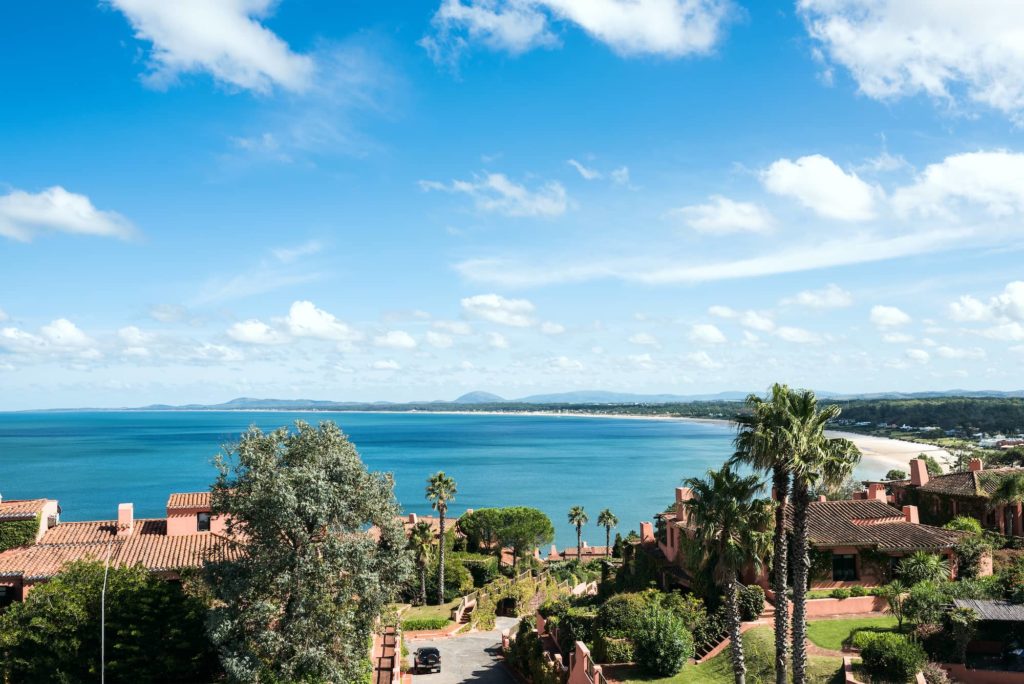
Imagine standing on a sun-drenched terrace, looking out over the Atlantic, only to realize that the very ocean breeze you adore is slowly weathering your investment. This is the subtle reality facing many who purchase premier oceanfront homes along the South American gold coast. For decades, the allure of waking up to waves crashing directly outside your window has driven the luxury market to historic heights.
Uruguay has emerged as the premier safe haven for international capital in South America. The pristine coastline stretching from the glittering high-rises to the bohemian dunes has captured the imagination of global wealth. As families and fund managers seek stability, this peaceful nation offers a rare combination of legal security, high quality of life, and pristine natural beauty.
However, as the market matures, a pragmatic question arises. Is it truly worth paying a massive premium to stand directly on the sand, or does a property situated just a few hundred meters back offer a superior balance of lifestyle and return? This analysis explores the real estate dynamics that are redefining coastal luxury.
Financial Metrics: Decoding the Coastal Premium
To understand the dynamics of this coastal corridor, one must look closely at the underlying financial indicators. First-line properties command a substantial premium, often trading at up to 50% more per square meter than their second-line counterparts. This premium is driven by the absolute scarcity of direct beachfront land and the historic prestige associated with oceanfront addresses.
Yet, this initial acquisition cost is only part of the holding equation. High operating expenses, particularly the substantial monthly maintenance fees in high-rise oceanfront towers, can quickly compress your net returns. These fees often cover extensive amenities that seasonal owners rarely use, creating a continuous drain on capital.
By contrast, second-line properties located 200 to 400 meters inland offer a highly compelling financial alternative. These properties benefit from lower entry points while still commanding premium rates during the lucrative summer rental season. Investors find that the purchase price differential allows them to allocate capital more efficiently across their portfolios.
Furthermore, Maldonado’s residential yields remain highly competitive, as tracked by the Uruguay gross rental yield index by Global Property Guide. This makes secondary-line properties an exceptionally attractive vehicle for capital preservation and income generation. The combination of lower entry costs and strong seasonal demand creates a resilient investment profile.
Market Intelligence & Data
Foreign Buyer Market Share
Foreign capital, predominantly from Europe, North America, and neighboring nations, accounts for three-quarters of all luxury real estate transactions on the Uruguayan coast, according to industry data from Team Haverkate.
Maldonado Rental Yield
The average gross rental yield for residential properties in the Maldonado coastal department climbed to 6.47% as of Q2 2026, as tracked by the Global Property Guide.
First-Line Price per Sqm
The highest-tier oceanfront and first-line tower properties in Playa Brava and José Ignacio command premium valuations ranging from $5,500 to $10,000 per square meter, based on 2026 real estate transaction data from TheLatinvestor.
Inquiry Growth
Driven by Uruguay’s safe-haven status, international property inquiries in Punta del Este saw a substantial 20% year-over-year increase, according to market reports from La Cite Real Estate.
Architectural Resilience: Confronting the Salt-Air Reality
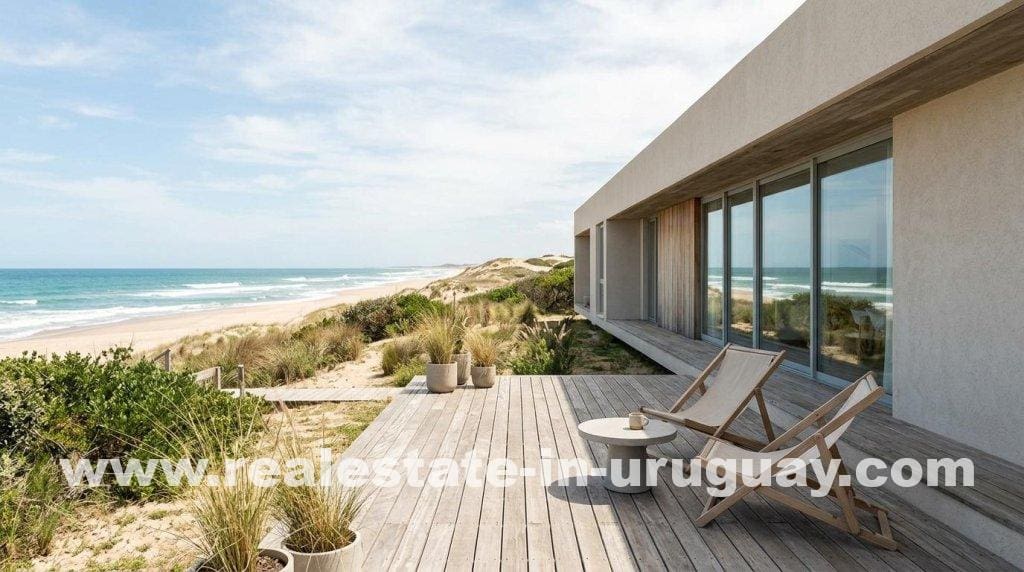
The physical environment of the Uruguayan coast is as demanding as it is beautiful. Direct exposure to the Atlantic ocean brings relentless wind and a highly corrosive maritime microclimate known locally as salitre. This airborne salt penetrates building materials, degrades finishes, and challenges even the most robust construction.
According to coastal property analytics published by TheLatinvestor, direct frontage on the Atlantic coast subjects properties to extreme salt-air corrosion, requiring landlords to budget approximately 1% of the property’s total value annually for exterior maintenance, whereas properties situated just 300 meters inland experience a dramatic reduction in environmental degradation.
This environmental shield is why many experienced European buyers are shifting their focus slightly inland. By choosing second-line beach properties, investors can enjoy the coastal lifestyle while bypassing the aggressive wear-and-tear that plagues direct beachfront structures. The natural topography and coastal vegetation act as a physical buffer, significantly extending the lifespan of exterior finishes.
Furthermore, modern construction standards have evolved to address these microclimatic challenges. Specialized local builders are now utilizing German-standard PVC double-glazing, insulated steel-framing, and climate-resilient treated eucalyptus grandis. These materials ensure that inland homes remain comfortable, dry, and structurally sound throughout the changing seasons.
Lifestyle Balance: The Best of Both Worlds
Choosing a second-line property does not mean compromising on the Uruguayan dream. Enclaves like La Barra and Manantiales offer beautiful, leafy streets where the beach is just a short, pleasant stroll away. This proximity allows residents to enjoy the ocean whenever they wish while retreating to a more protected environment.
These inland pockets provide a sense of privacy and tranquility that is often hard to find on the busy first-line boardwalks. Surrounded by maritime pines and protected from the strongest coastal winds, these homes offer a peaceful sanctuary. Children can play safely in quiet residential streets, away from the main coastal thoroughfares.
During the peak summer months, these areas come alive with vibrant boutique shops and world-class dining. Residents can easily access the best local restaurants without dealing with the direct congestion and noise of the beachfront. This blend of accessibility and seclusion represents the true essence of coastal living.
This balance makes second-line living highly appealing not just for seasonal tourists, but also for year-round residents. As more global nomads and retirees choose Uruguay, the demand for comfortable, sheltered homes continues to grow. The shift toward permanent residency is transforming these seasonal enclaves into active, year-round communities.
Team Haverkate Analysis: Strategic Portfolio Allocation
At Team Haverkate, we approach coastal real estate with a blend of aesthetic appreciation and rigorous financial analysis. Our perspective is shaped by decades of helping international clients navigate this unique market. We understand that a property must not only inspire but also perform financially.
We have observed a distinct shift in how sophisticated buyers evaluate coastal properties. The historical prestige of direct ocean views is being weighed against the practical realities of holding costs and structural maintenance. A sharp 12% year-over-year appreciation in the luxury coastal property segment of Punta del Este has intensified this strategic debate.
From our analytical standpoint, second-line homes in areas such as La Juanita near José Ignacio represent some of the most efficient assets on the market. These boutique, low-overhead developments allow owners to cover their entire annual operating costs by renting out the property for just two to three weeks during the peak summer season. This high rental velocity during the ‘Golden Circuit’ provides excellent liquidity.
By avoiding the bloated communal expenses of traditional oceanfront towers, investors can enjoy a highly secure asset that preserves capital. This low-overhead model is particularly attractive to European buyers who prioritize long-term sustainability and peace of mind. Our team at Team Haverkate believes that the future of coastal luxury lies in these smart, resilient designs that offer a lifestyle experience while maintaining an optimized financial footprint.
The Buyer’s Roadmap: Navigating the Uruguayan Coast
For those ready to explore the coastal market, a strategic approach is essential. Navigating the nuances of local construction, zoning, and microclimates requires local expertise and clear planning. It is not simply about finding a beautiful home, but ensuring that home is built to withstand the coastal elements.
We recommend focusing on master-planned second-line communities that prioritize ecological sustainability and modern comforts. These hybrid lifestyle assets are uniquely positioned to capture both lifestyle enjoyment and strong capital appreciation. They represent the next generation of coastal living, combining security with environmental responsibility.
Strategic Trajectory
- Transition to Hybrid Lifestyle Assets: Capitalize on the shift from seasonal summer usage to year-round living for global nomads and active retirees.
- Invest in High-Utility Second-Line Micro-Communities: Focus on highly secure, master-planned projects featuring shared co-working spaces, solar micro-grids, and advanced water filtration systems.
- Implement Micro-Climate Architectural Optimization: Use physical landscaping and strategic positioning to block winter winds while utilizing elevation to secure valuable sea views.
- Prioritize Low-Overhead Sustainable Luxury: Shift high-end allocations from costly, high-maintenance direct beachfront to secure, low-overhead second-line villas that preserve capital and peace of mind.
When evaluating a potential purchase, always look for properties that incorporate high-performance thermal insulation and moisture barriers. These features are critical for maintaining year-round comfort and protecting your investment from the coastal humidity. Working with specialized builders who understand these requirements will save significant maintenance costs in the future.
Strategic Conclusion: Protecting Your Coastal Investment
Investing in Uruguayan coastal real estate offers an unparalleled opportunity to secure a high-quality lifestyle in one of South America’s most stable nations. Whether you choose the dramatic presence of a first-line residence or the smart efficiency of a second-line villa, the key to success lies in objective, independent guidance.
To safeguard your interests, it is critical to understand the local transactional landscape. A common challenge for international buyers is the widespread industry practice of dual agency, where a single broker represents both the buyer and the seller. This practice creates an inherent conflict of interest that can lead to compromised terms and inflated valuations.
At Team Haverkate, we stand vehemently against dual agency. We operate exclusively as a dedicated buyer’s agent, ensuring our sole fiduciary responsibility is to protect you, the investor, with independent legal and financial oversight. We believe that every buyer deserves uncompromised representation throughout the entire acquisition process.
If you are ready to explore the exceptional potential of the Uruguayan coast, contact Team Haverkate today. Our expert advisory team is ready to assist you in English, German, French, or Dutch.
Frequently Asked Questions
Is it more profitable to invest in first-line or second-line beach properties in Uruguay?
While first-line properties command a 50% price premium, second-line properties located 200 to 400 meters inland often offer superior net returns. They benefit from lower acquisition costs and significantly lower maintenance fees while still commanding premium rental rates during the peak summer season.
How much should I budget for annual maintenance on an oceanfront home?
Properties with direct Atlantic exposure require a maintenance budget of approximately 1% of the property’s total value annually. This is primarily due to salitre (salt-air corrosion), which is significantly less aggressive for homes located just 300 meters inland.
What are the current rental yields for real estate in the Maldonado department?
The average gross rental yield for residential properties in Maldonado reached 6.47% as of Q2 2026. This makes the region a highly attractive destination for international capital seeking both income generation and long-term capital appreciation.
Why should I avoid dual agency when purchasing property in Uruguay?
Dual agency creates an inherent conflict of interest where a single broker represents both the buyer and the seller. To ensure your interests are protected, it is best to work with an exclusive buyer’s agent who provides independent legal oversight and objective valuation.
Which building materials are best suited for the Uruguayan coastal climate?
High-quality coastal builds should utilize German-standard PVC double-glazing, insulated steel-framing, and treated eucalyptus grandis. These materials, combined with advanced moisture barriers and thermal insulation, are essential for managing the maritime microclimate.
Are second-line coastal properties suitable for year-round living?
Yes, areas like La Barra and Manantiales are increasingly popular for year-round residents. These pockets are protected from the strongest winter winds and offer a peaceful, leafy environment that is often more sustainable for permanent living than high-exposure first-line towers.