KEY POINTS
- The dollar closed 0.62% lower at 40.092 pesos, its lowest since September 23.
- The exchange rate has now held above 40 pesos for 74 consecutive sessions.
- Bevsa recorded 73 transactions totaling more than $45.9 million.
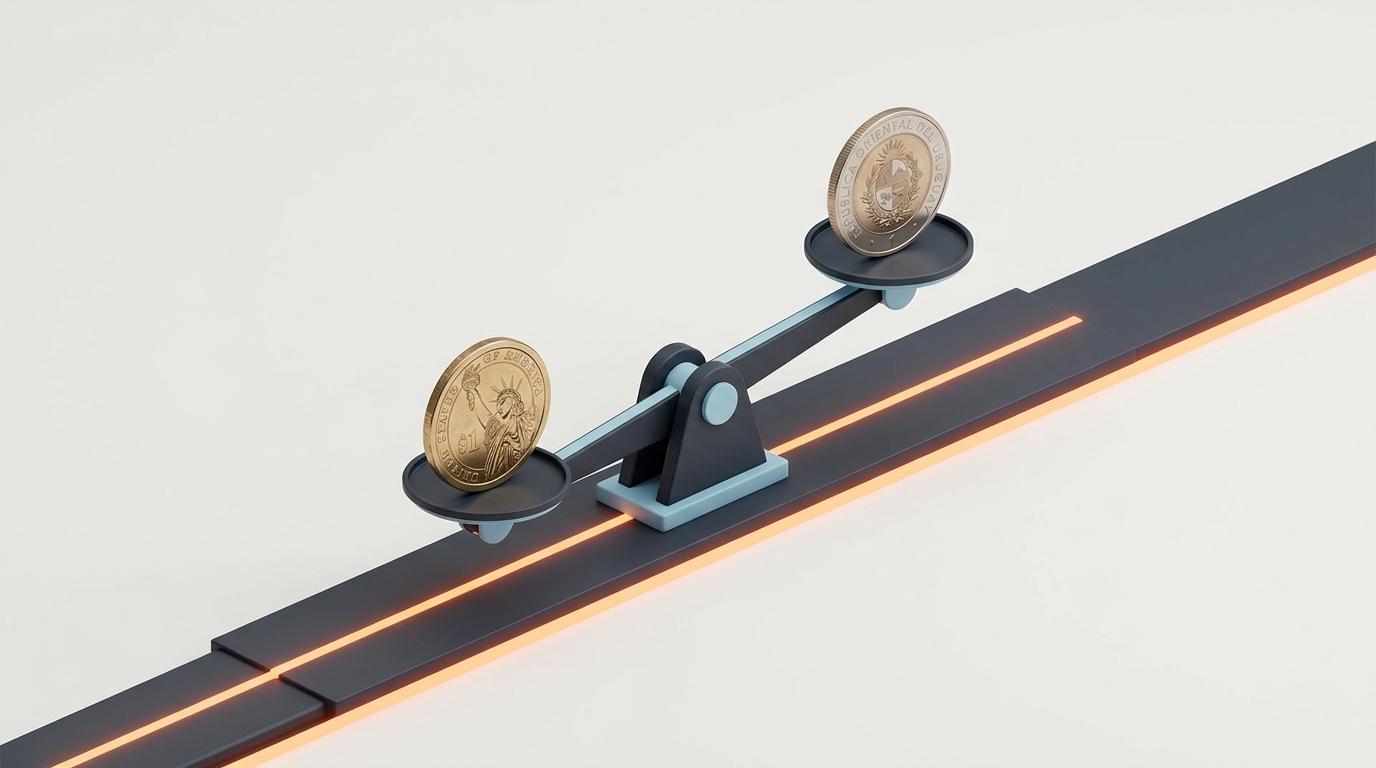
The Uruguayan peso strengthened 0.62% against the U.S. dollar on Monday, pushing the interbank reference rate down to 40.092 pesos per dollar—its lowest level since September 23. Despite the decline, the exchange rate remains above the 40-peso threshold for the 74th consecutive session.
The Central Bank of Uruguay’s daily reference rate, as compiled by ámbito.com, showed the dollar falling 0.25 pesos from Friday’s close. For the month so far, the U.S. currency is 0.48% lower, though it still holds a 2.69% gain on the year.
In the retail market, the Bank of the Republic (BROU) quoted the dollar at 39.05 pesos for purchase and 41.45 pesos for sale. The bank’s preferential eBROU platform offered rates of 39.55 pesos for purchase and 40.95 pesos for sale.
On the Electronic Stock Exchange of Uruguay (Bevsa), the dollar closed at 40.250 pesos after 73 transactions totaling more than $45.9 million. The stablecoin Tether (USDT), which maintains 1:1 parity with the dollar, traded at 41.38 pesos through direct credit card purchases and between 41.89 and 44.75 pesos on Binance’s peer-to-peer market.
The peso’s move came as the global dollar index edged up 0.3% to around 102.2 points, supported by elevated U.S. Treasury yields. Meanwhile, the Brazilian real surged more than 4% against the dollar after the first round of presidential elections, adding regional pressure that favored Latin American currencies including the Uruguayan peso.
What the Peso’s Strength Signals for Investors
Uruguay’s classification among Latin America’s bimonetary financial systems—where the dollar coexists with the domestic currency—means exchange-rate movements directly influence property valuations, rental contracts, and loan servicing for dollar-denominated assets. The peso’s recent firmness reduces the local-currency cost of dollar-linked obligations but can compress returns on peso-priced investments. With most long-term financing in the country denominated in U.S. dollars, international investors should monitor whether the peso holds below the 40-peso mark or rebounds, as sustained strength could shift the relative attractiveness of dollar- versus peso-based real estate transactions.