Key Takeaways
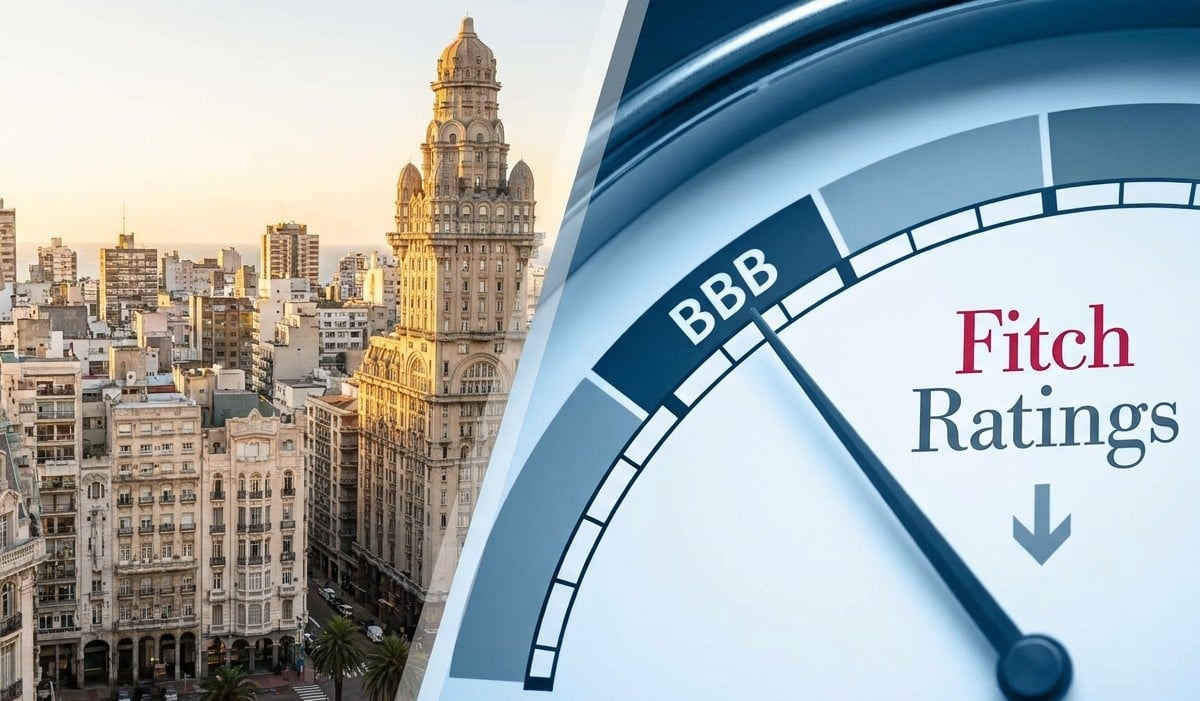
- Fitch affirmed Uruguay at BBB on September 10 after applying a one-notch macro adjustment to a BBB+ model score, citing high dollarization, wage indexation and a long inflation history.
- Fitch forecasts only 1.0% GDP growth for 2026 and gross debt at 68% of GDP versus a 57% BBB median, even as reserves cover 8.5 months of external payments.
- Orsi’s credibility pitch rests on the Mercosur-EU deal, CPTPP accession and a Competitiveness bill still pending in the Chamber of Deputies, while Team Haverkate flags dual agency as a hidden risk for buyers.
Table of Contents
Rules That Do Not Reset With Elections
President Yamandú Orsi arrived at the Americas Society/Council of the Americas in New York on September 22 carrying a rare regional promise: Uruguay’s rules would not change with the political cycle. The appearance, first covered by Latin Times, framed institutional continuity, macroeconomic strength, and social cohesion as the country’s primary competitive advantage before an audience of business leaders and international investors.
That message landed against a distinctly unsettled South American backdrop. Venezuela’s transition remained unresolved, and Brazil’s October presidential contest was polling as a technical tie. In that context, the Uruguayan offer was less about outsized returns and more about legibility—the ability to underwrite a project without repricing political risk every four or five years.
Orsi did not promise a world without uncertainty. Instead, he asked investors to treat Uruguay as a jurisdiction where the rules of engagement stay constant, even as the region around it shifts.
The Investment-Grade Arithmetic Behind Montevideo’s Pitch
What the Agencies Actually Validate
Uruguay retains investment-grade ratings across all three major agencies: S&P at BBB+, Moody’s at Baa1, and Fitch at BBB, each with a stable outlook. Japan Credit Rating Agency goes a step higher, assigning an A- foreign-currency rating and an A local-currency rating, supported by resilience to external shocks, prudent fiscal management, and a stable financial system.
Those ratings carry real weight in a region where only one other South American sovereign holds investment-grade debt. For international capital allocators, Uruguayan paper and Uruguayan operating exposure begin from a different default-risk baseline than most of the continent.
Yet the Fitch affirmation on September 10 came with an important structural caveat. The agency’s sovereign rating model produced a score equivalent to BBB+, but its committee applied a one-notch macro adjustment before settling on BBB. The reasons were specific: high dollarization, wage and contract indexation, and a long history of inflation that still constrains policy flexibility.
Growth Forecasts and the Debt Overhang
Growth is the weakest point in the narrative. Fitch expects Uruguay’s GDP to expand by only 1.0% in 2026, well below the government’s revised 1.6% estimate. That follows a deceleration from 3.3% in 2024 to 1.8% in 2025. Investment was 16% of GDP in 2025, while the current account deficit narrowed to 0.5% of GDP and was fully financed by foreign direct investment.
The public balance sheet is also heavier than the regional safe-haven label suggests. Fitch projects gross government debt will reach 68% of GDP in 2026, up from 64.4% in 2025 and well above the BBB median of 57%. The maturity profile remains a strength—average time to maturity is about 12 years—but the debt stock still sits above peers.
- Inflation: 4.6% year-on-year in August 2026, up from 3.1% in February, against a 4.5% central bank target.
- Competitiveness bill: Unanimously approved by the Senate in August, now awaiting final action in the Chamber of Deputies.
- External buffer: Reserves covered 8.5 months of external payments in 2025, compared with the BBB median of 5.0 months.
As Latin Times reported, Orsi’s broader pitch went beyond stability. He highlighted the Mercosur–European Union agreement, Uruguay’s accession process to the CPTPP, and deeper OECD engagement as long-horizon credibility signals. The sectoral focus included agribusiness and bioeconomy, green hydrogen, data centers, life sciences, logistics, and global services—areas where the government argues that institutional stability can convert into project pipelines.
The Haverkate Perspective: Where the Safe-Haven Label Meets Friction
Team Haverkate has long observed that Uruguay’s investment appeal rarely comes from fast GDP prints. It comes from the durability of contracts, property rights, and banking relationships. The New York appearance reinforced that positioning, but the market-facing tension is equally clear: the country’s ratings are anchored by institutions while its growth and debt metrics remain softer than the safe-haven label implies.
Orsi himself acknowledged that stability alone would not accelerate growth. That admission framed the rest of the agenda—modernizing incentives, attracting skilled talent, and cutting red tape through the proposed Competitiveness and Cost-of-Living Reduction Law.
Fitch’s decision to apply a macro notch despite a model score of BBB+ is the kind of analytical friction investors should not ignore. Uruguay’s high dollarization and wage indexation limit monetary policy flexibility, while the debt-to-GDP ratio runs above the BBB median. That does not make Uruguayan exposure risky in absolute terms, but it does mean the premium is earned through stability rather than through momentum.
The U.S. News Best Countries 2026 ranking captures the same split. Uruguay places 45th overall, with governance and civic health scoring above that aggregate, while economic development sits at 57th. For real assets and operating businesses, that divergence shows up in longer permitting cycles, higher logistics costs, and a smaller domestic market than comparable investment-grade economies.
The comparative advantage is also not permanent. Should Venezuela’s transition solidify or Brazil’s runoff produce a clear governing mandate, Uruguay’s regional contrast would narrow, forcing the country to compete more directly on cost, productivity, and speed of execution. Still, Japan Credit Rating Agency expects growth to return to the 2% range over the medium term, conditional on agricultural performance, external demand, and the competitiveness bill clearing the lower house.
For investors converting this macro conversation into a direct position—whether a commercial asset, agricultural holding, or operating company—Team Haverkate maintains excellent relationships with vetted local legal and tax specialists who can structure the entry properly.
From Regional Contrast to Visible Results
Uruguay’s New York presentation was not a promise of frictionless returns. It was an invitation to measure the country by execution—whether the competitiveness reform, investment-grade ratings, and regional contrast translate into actual project pipelines and easier operating conditions. The next test is not another speech; it is how quickly the lower house acts and whether growth responds to the government’s revised 1.6% target.
One structural risk that international buyers often overlook is dual agency. In Uruguay, a broker or agent representing both purchaser and seller in the same transaction creates an inherent conflict of interest: the intermediary cannot simultaneously maximize value for the seller and minimize risk for the buyer. That arrangement can soften price negotiations, obscure condition liabilities, and leave an investor without genuinely independent representation. A buyer entering a market as institutionally stable as Uruguay’s should not combine that stability with an avoidable agency conflict.
Uruguay’s pitch asked international capital to underwrite continuity. Team Haverkate helps buyers and investors examine whether specific assets and projects actually deliver that promise—on the ground, from Montevideo, and without surrendering the very predictability that drew them to the market.
Frequently Asked Questions
Is Uruguay investment grade in 2026?
Yes. Uruguay holds investment-grade ratings from all three major agencies: S&P at BBB+, Moody’s at Baa1, and Fitch at BBB, each with a stable outlook. Japan Credit Rating Agency assigns an A- foreign-currency rating and an A local-currency rating.
Why did Fitch rate Uruguay BBB instead of BBB+?
Fitch’s sovereign model produced a score equivalent to BBB+, but its committee applied a one-notch macro adjustment to BBB. The reasons were high dollarization, wage and contract indexation, and a long inflation history that limits monetary policy flexibility.
What is Uruguay’s GDP growth forecast for 2026?
Fitch expects Uruguay’s GDP to expand by only 1.0% in 2026, below the government’s revised 1.6% estimate. That follows 3.3% growth in 2024 and 1.8% in 2025. Japan Credit Rating Agency expects a return to the 2% range over the medium term, conditional on agricultural performance, external demand, and the competitiveness bill.
How high is Uruguay’s government debt?
Fitch projects gross government debt will reach 68% of GDP in 2026, up from 64.4% in 2025, and above the BBB median of 57%. The average time to maturity is about 12 years, which remains a strength, but the debt stock is heavier than peers.
What did President Orsi pitch to investors in New York?
Orsi pitched institutional continuity, macroeconomic strength, and social cohesion as Uruguay’s main competitive advantages. He also highlighted the Mercosur-European Union agreement, CPTPP accession, deeper OECD engagement, and sectors including agribusiness and bioeconomy, green hydrogen, data centers, life sciences, logistics, and global services.
What is Uruguay’s Competitiveness and Cost-of-Living Reduction Law?
It is a bill unanimously approved by the Senate in August 2026 and awaiting final action in the Chamber of Deputies. It aims to modernize incentives, attract skilled talent, and cut red tape to improve Uruguay’s operating environment.
What is dual agency in Uruguayan real estate?
Dual agency occurs when one broker or agent represents both the purchaser and the seller in the same transaction. In Uruguay, this creates an inherent conflict of interest: the intermediary cannot simultaneously maximize value for the seller and minimize risk for the buyer, which can soften price negotiations, obscure condition liabilities, and leave an investor without genuinely independent representation.