Key Takeaways
- Solaria’s $5.7B plan splits $5.5B for data centers and $200M for a 350 MW solar park, yet the campus needs 500 MW, forcing UTE to bridge a 150 MW gap via a 40-year PPA and national grid.
- Land claims vary by department: Canelones seeks ~100 hectares, San José ~150, and Florida’s UTE-owned Cardal site was confirmed at 670 hectares, while a senator’s bill to bar data centers above the Raigón aquifer adds regulatory risk.
- Execution hinges on sequencing: land purchases, environmental permits, and financing must close before political opposition hardens, as Solaria shares fell nearly 8% in one Madrid session a week after the announcement.
Table of Contents
A $5.7 Billion Campus Moves From Announcement to a Working Timeline
Uruguay’s largest announced investment has now been mapped, department by department, with construction targeted for 2027 and the first phase of computing capacity expected around 2029.
The Solaria plan calls for two data centers in Canelones and San José, a solar park in Florida, and roughly 3,100 construction jobs followed by 1,500 permanent positions.
President Yamandú Orsi met with the three departmental mayors on Monday, Nov. 9, to launch a joint work schedule, a step first reported by Latin Times.
The announced campus puts the state utility UTE at the center through a 40-year power purchase agreement, while land and aquifer concerns remain unresolved.
The Power, Land, and Water Mechanics of a 500 MW Build
Solaria’s structure separates $5.5 billion for data centers from $200 million for solar generation.
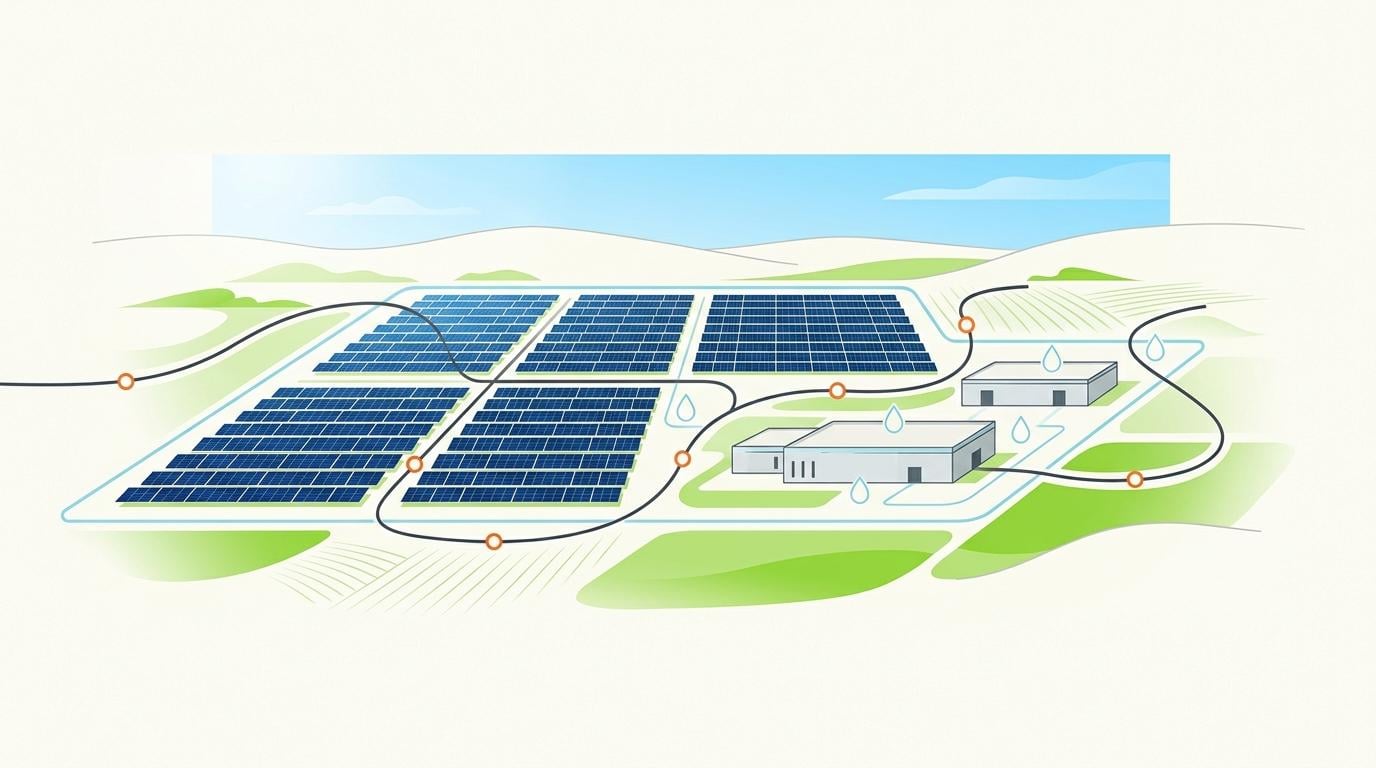
But the numbers create a tension: the solar park would deliver 350 megawatts, while the full campus is designed for 500 MW of data center load.
That gap means UTE is not a bystander. Solaria plans to sell solar output to the state utility under a 40-year purchase agreement, and UTE would supply the difference through the national grid.
Phase one covers 200 MW of computing plus all 350 MW of solar, with 300 MW of computing added later.
Canelones Mayor Francisco Legnani put the scale in context.
Google in Canelones will use 64 megawatts
He said the Solaria campus would equal close to four facilities of that size.
Land Claims Shift by Department
Canelones is looking at roughly 100 hectares, San José about 150.
San José Mayor Ana María Bentaberri said the talks left her with a positive first impression, but her government still lacks formal information on the land Solaria is seeking in her department.
The solar park in Florida would sit on state-owned UTE land in Cardal. Early reporting cited about 300 hectares for a first stage; later figures pointed to 670 hectares loaned by UTE, a number confirmed by Uruguay’s Presidency on Nov. 9.
That matters because Florida’s dairy producers arrived with questions about expropriation. After the meeting, Mayor Carlos Enciso said UTE already holds the land and that its zoning has been reclassified.
Industry Minister Fernanda Cardona rejected the 2,700-hectare estimate.
an absolute unreality
She added that technical estimates run closer to 50 hectares per 100 MW of data center demand. Which department breaks ground first is still open and will hinge on land purchases and environmental approvals.
Water Politics Move Faster Than Permits
The Raigón aquifer lies beneath San José, and National Party Senator Sebastián Da Silva has filed a bill to bar data centers above the Guaraní and Raigón aquifers.
Opposition lawmakers are also pressing Solaria publicly on its lenders and investors. According to Latin Times, Solaria shares fell nearly 8% in one Madrid session a week after the announcement.
Cardona said the company holds international certification for data center construction and will face strict environmental controls.
Meanwhile, Orsi heads to Spain from Nov. 14 to 17 for a Fórum Europa breakfast event sponsored partly by Solaria, a trip that keeps the political relationship in plain view.
Team Haverkate’s Read: Execution Risk Is the Real Signal
For us, the Solaria file is not primarily a solar story or a data center story. It is a stress test of Uruguay’s institutional brand when a single project collides with land politics, water protection, and financing doubt at the same time.
The national data center pipeline is real. BNamericas has separately outlined an Antel data center timetable: $70 million, construction from July 2027, commissioning in the first half of 2029.
That separate timetable reinforces something investors should note: Uruguay is moving from isolated announcements into a synchronized infrastructure push, and the dates are no longer abstract.
Global capital flows support the urgency. fDi Intelligence data shows data centers were the leading subsector among the world’s top 50 greenfield investors between January 2025 and June 2026, with $219 billion in pledges, about one-third of total capex in the study period.
But the OECD has framed the same question from a public-policy side: energy, land, water, and critical minerals are the physical inputs of AI compute, not externalities. Uruguay’s unresolved aquifer fight is therefore not a side issue; it sits at the center of how serious jurisdictions manage data center buildouts.
Among 46 GPAI member countries and the EU, only Canada and the United Kingdom have dedicated national AI compute strategies. Chile’s National Data Center Plan, by contrast, already prioritizes reducing energy and water consumption in the data center industry.
In our experience advising international investors, the real due diligence on this project will not be about whether Solaria can sign a power purchase agreement. It will be about sequencing: can land acquisitions, environmental permits, and financing close before political opposition hardens into law?
Uruguay’s Next Test: Institutional Trust Meets Infrastructure Speed
The Solaria timeline gives Uruguay something it has not had at this scale before: a visible, dated pathway from political announcement to construction and first power.
If the 2027 start holds, the first phase near 2029 would coincide with Antel’s data center commissioning and a wider regional push to treat data infrastructure as national capacity.
There is one risk on the buying side worth flagging. In Uruguay’s real estate market, dual agency occurs when the same broker or firm represents both the buyer and the seller in one transaction. That structure creates an unavoidable conflict of interest: the agent cannot push the buyer’s price down while protecting the seller’s price up, and hidden liabilities or inflated valuations become harder to challenge.
Team Haverkate helps international buyers and investors assess exactly these execution risks, from land and permitting constraints to utility and infrastructure exposure, and maintains close relationships with vetted local legal and environmental specialists for anyone structuring a cross-border entry into Uruguay.
Frequently Asked Questions
What is the Solaria data center project in Uruguay?
The Solaria project is Uruguay’s largest announced investment at roughly $5.7 billion. It includes two data centers in Canelones and San José, plus a solar park in Florida. Construction is targeted for 2027, with the first phase of computing capacity expected around 2029. The plan calls for about 3,100 construction jobs and 1,500 permanent positions.
How much power will the Solaria campus use, and where does it come from?
The full campus is designed for 500 MW of data center load, but the solar park would deliver only 350 MW. Solaria plans to sell solar output to the state utility UTE under a 40-year power purchase agreement, and UTE would supply the remaining power through the national grid. Phase one covers 200 MW of computing plus all 350 MW of solar, with 300 MW of computing added later.
How much land does the Solaria project require?
Canelones is looking at roughly 100 hectares and San José about 150. The solar park in Florida would sit on state-owned UTE land in Cardal, with later figures pointing to 670 hectares loaned by UTE, a number confirmed by Uruguay’s Presidency on Nov. 9. Industry Minister Fernanda Cardona rejected a 2,700-hectare estimate as ‘an absolute unreality,’ saying technical estimates run closer to 50 hectares per 100 MW of data center demand.
Why is the Raigón aquifer a point of conflict for the project?
The Raigón aquifer lies beneath San José, and National Party Senator Sebastián Da Silva has filed a bill to bar data centers above the Guaraní and Raigón aquifers. The dispute matters because energy, land, and water are core physical inputs of AI compute rather than side issues. How Uruguay resolves the aquifer question will shape whether the project’s permits and land acquisitions can close before political opposition hardens into law.
What are the main execution risks for the Solaria project?
The central risk is sequencing: whether land acquisitions, environmental permits, and financing can close before political opposition becomes legislation. Other signals include unresolved aquifer politics, questions from opposition lawmakers about Solaria’s lenders and investors, and a reported nearly 8% drop in Solaria shares in one Madrid session a week after the announcement. Which department breaks ground first remains open and depends on land purchases and environmental approvals.
How does the Solaria timeline compare with other Uruguayan data center projects?
BNamericas has outlined a separate Antel data center timetable: $70 million, construction from July 2027, and commissioning in the first half of 2029. If Solaria’s 2027 start holds, its first phase near 2029 would coincide with Antel’s commissioning, reinforcing that Uruguay is moving from isolated announcements into a synchronized infrastructure push with dated milestones.
What should international investors watch before committing to Uruguay data center exposure?
Investors should focus on execution rather than whether a power purchase agreement can be signed. The key checks are land title and acquisition timing, environmental and water permits, utility and grid exposure through UTE, and financing certainty. In Uruguay’s real estate market, dual agency, where one broker represents both buyer and seller, creates a conflict of interest that makes hidden liabilities and inflated valuations harder to challenge, so independent local legal and environmental review is essential.