Key Takeaways
- SkyTel’s acquisition of MetroCall retains 360 employees across Uruguay and Paraguay, preserving demand for office space and residential housing near delivery centers.
- The deal shows Argentine capital buying established Uruguayan service capacity rather than exiting, a quiet endorsement of the country’s business infrastructure.
- For property investors, the transaction highlights the link between foreign corporate investment and commercial real estate demand, while warning of dual-agency risks in direct purchases.
Table of Contents
An Argentine BPO Group Locks Into Uruguay’s Services Talent Pool
Around 360 employees now work for a new owner in Uruguay’s services sector.
SkyTel, an Argentina-based business process outsourcing and technology services group, acquired MetroCall, a Uruguayan contact center co-founded by Sergio Fogel and Joseph Birnfeld. The deal was first reported by Nearshore Americas.
MetroCall’s service lines span customer support, sales, collections, and other back-office work. Its delivery centers sit in Uruguay and Paraguay.
For investors watching Uruguay, the transaction is not a headline-scale megadeal. It is a quieter signal: regional capital is still buying Uruguayan service capacity, not retreating from it.
Why a 360-Person Contact Center Matters to a Regional Buyer
MetroCall operates in business process outsourcing, a segment built around recurring corporate tasks that demand labor, stable infrastructure, and trust. Buying an existing operation is often faster and less risky than launching from zero in a new market.
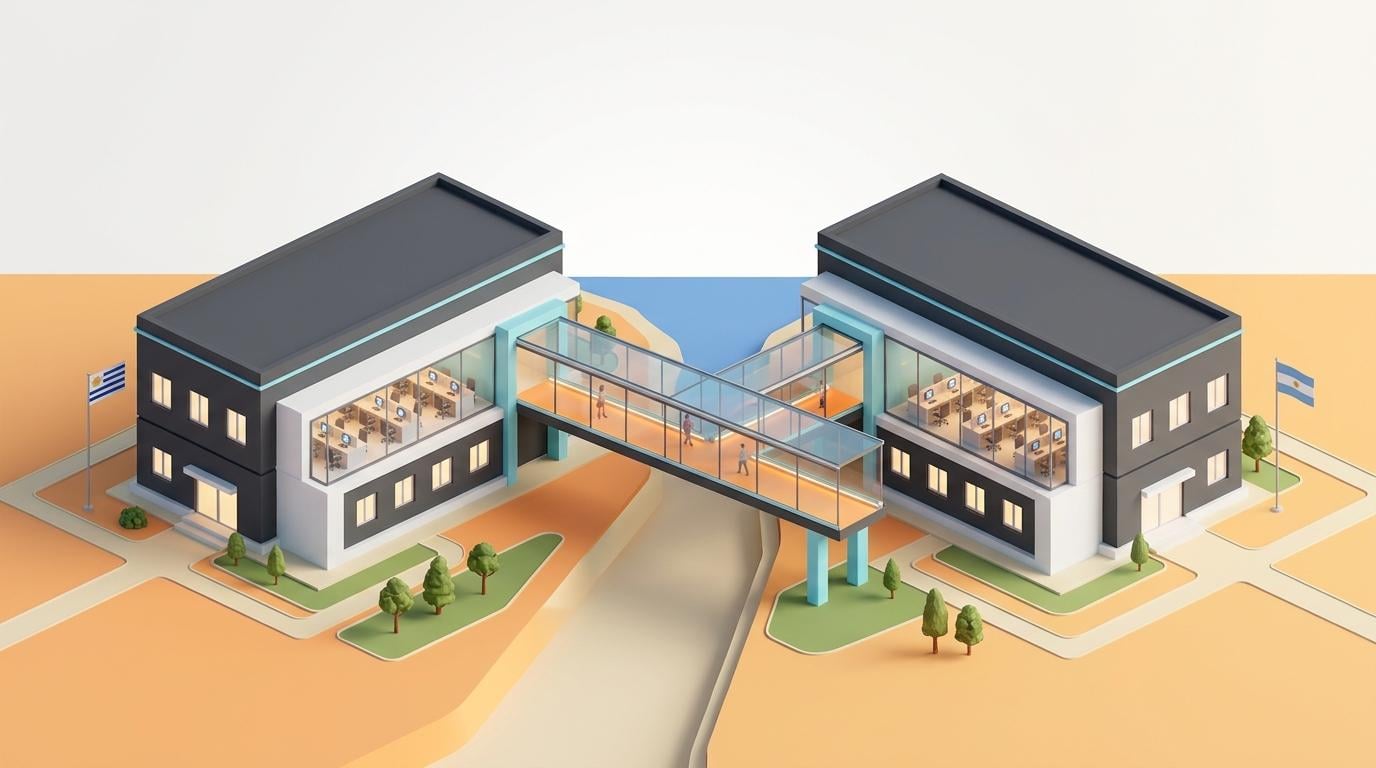
The target’s footprint spans delivery centers in Uruguay and Paraguay. That two-country structure gives the acquirer a hedge on workforce availability and client delivery time zones without concentrating operational risk in one place.
Founded in 2009, MetroCall has spent more than a decade accumulating the kind of client relationships that are difficult to replicate through a greenfield entry. The acquisition adds immediate capacity and an existing customer book.
By retaining the operation, SkyTel also keeps a tested local workforce and institutional knowledge of Uruguayan labor practices. That lowers integration risk for a foreign parent, which matters when service quality is the product.
Our Read: What the Deal Signals for Uruguay’s Investment Landscape
We view this transaction, first reported by Nearshore Americas, as a quiet endorsement of Uruguay’s services infrastructure. A neighboring-market buyer is not chasing a speculative narrative; it is acquiring an established operation with a workforce and cross-border delivery capacity already in place.
That has a direct echo in real estate. Contact centers are physical operations: they need office space, dependable utilities, and access to workers. When a foreign buyer keeps those operations in place, it supports demand for the commercial space and nearby residential areas that house the workforce.
The absence of a disclosed price makes it impossible to judge valuation. We would not stretch one mid-sized acquisition into a broad claim about services-sector prices in Uruguay. Still, the direction matters: Argentina-based capital is choosing to own Uruguayan delivery capacity rather than exit it.
The Next Wave for Uruguay’s Services Economy
Foreign buyers often enter a country first through companies, then through real estate, then through a deeper relationship with the market. The MetroCall acquisition suggests that the first step remains open in Uruguay, even when regional economies face pressure.
There is one risk on the buying side worth flagging if this signals you into a direct property purchase. For a property investor, dual agency is a conflict of interest that arises when a single broker represents both the buyer and the seller in the same transaction. That structure can leave an investor exposed to inflated valuations, hidden liabilities, or a negotiation where the agent’s loyalty is split.
It is one of the few scenarios where the cost of local convenience can quietly outweigh the benefit.
For investors watching Uruguay’s evolution, the SkyTel-MetroCall transaction is a data point, not a thesis. It shows foreign capital working through established local operations instead of around them. Team Haverkate helps international buyers and investors read signals like that on the ground and convert them into durable property decisions.
We also maintain close relationships with vetted local tax and legal specialists for anyone structuring a cross-border entry.
Frequently Asked Questions
Who acquired MetroCall and how many employees are involved?
SkyTel, an Argentina-based business process outsourcing and technology services group, acquired MetroCall, a Uruguayan contact center co-founded by Sergio Fogel and Joseph Birnfeld. Around 360 employees now work for the new owner, and MetroCall’s delivery centers operate in both Uruguay and Paraguay.
Why would a regional BPO buyer acquire an existing contact center instead of building one?
Buying an established operation is often faster and less risky than a greenfield launch. MetroCall, founded in 2009, brings more than a decade of client relationships, a tested local workforce, and institutional knowledge of Uruguayan labor practices. Its two-country footprint in Uruguay and Paraguay also hedges workforce availability and delivery time zones without concentrating operational risk in one place.
What does the SkyTel-MetroCall deal signal for Uruguay’s investment landscape?
It is a quiet endorsement of Uruguay’s services infrastructure rather than a headline megadeal. A neighboring-market buyer is acquiring established delivery capacity instead of exiting it, which shows regional capital still buying into Uruguayan service operations even when regional economies face pressure. No price was disclosed, so the transaction cannot support broad claims about services-sector valuations.
How does a contact center acquisition affect Uruguay’s real estate market?
Contact centers are physical operations that need office space, dependable utilities, and access to workers. When a foreign buyer retains those operations, it supports demand for commercial space and for nearby residential areas that house the workforce, creating a downstream link between services-sector investment and property demand.
What is dual agency and why is it a risk for property buyers in Uruguay?
Dual agency is a conflict of interest that arises when a single broker represents both the buyer and the seller in the same transaction. That structure can expose an investor to inflated valuations, hidden liabilities, or a negotiation where the agent’s loyalty is split, making it one of the few scenarios where local convenience can quietly outweigh the benefit.
What is the typical path foreign investors take into the Uruguayan market?
Foreign buyers often enter a country first through companies, then through real estate, then through a deeper relationship with the market. The MetroCall acquisition suggests that first step remains open in Uruguay, giving investors a way to read local signals before committing to a direct property purchase.