Key Takeaways
- The Lucía solar park’s 876 MW filing covers 1,500 hectares, 1,844,400 panels, and a 47-km grid connection—a concrete infrastructure signal for Paysandú land.
- Public consultation through 30 November is a regulatory gate, not a construction permit, but it reduces early-stage uncertainty for institutional capital tracking HIF’s Uruguay e-fuels complex.
- With 200+ green hydrogen projects in Latin America and up to USD 300 billion in potential investment, interior land near grid and road access is drawing more due diligence from energy-linked buyers.
Table of Contents
An 876 MW Solar Filing Moves Uruguay’s Hydrogen Ambitions Forward
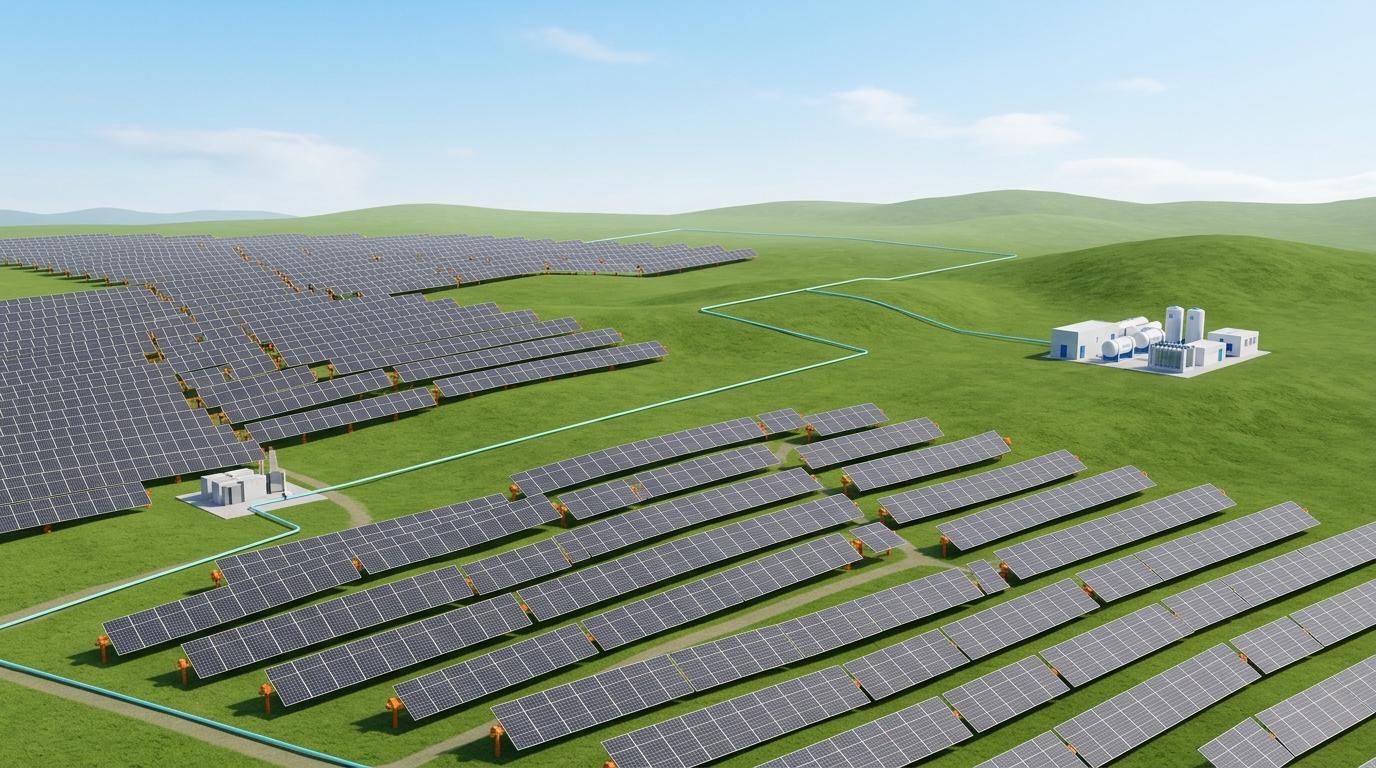
An 876 MW solar park in Paysandú has entered Uruguay’s environmental public consultation, opening a window through 30 November for citizens and interested parties to review technical documents and submit observations. The Lucía photovoltaic park is the solar half of HIF Uruguay’s planned e-fuels complex, designed to feed renewable power into a future synthetic fuels plant.
The filing was first reported by El Observador. It covers a 1,500-hectare site with 1,844,400 panels, a 47-kilometer high-voltage connection to the national grid, and a construction timetable expected to employ 400 to 650 workers over five and a half years.
How the Lucía Park Connects to Uruguay’s Grid and Industrial Logic
HIF Uruguay’s larger plan pairs the Lucía solar park with the Elena wind park in the Cuchilla del Fuego area. Both installations would supply electricity to an industrial complex that produces synthetic fuels from green hydrogen and carbon of biogenic origin.
The solar project sits in the tenth cadastral section of Paysandú, with access from kilometer 101 of National Route 26. Its final grid connection would be a 47-kilometer high-voltage line running east, with definitive engineering provided by the state utility UTE.
Construction would take five and a half years across three consecutive stages. The developer expects an average of 400 to 500 workers during that period, with peaks of 650, and 25 to 30 permanent positions once the plant becomes operational.
Here is the core technical profile:
- Capacity: 876 MW nominal installed power
- Land: 1,500 hectares
- Grid link: three substations and a 47-kilometer line to the national grid
- Construction: five and a half years, with local labor prioritized in the area of influence
HIF Global brings an existing operational reference from the Haru Oni plant in Chile and has projects underway in the United States, Brazil, Australia and Uruguay. Uruguay’s experience with large renewable build-outs makes the permitting path a key signal.
What the Consultation Does and Does Not Signal
As El Observador first reported, entering public consultation is a regulatory gate, not a construction permit. The Environment Ministry has opened the technical documentation for review, and the public can submit observations through the end of November.
CEO Martín Bremermann framed the step as part of the environmental evaluation process and a continuation of dialogue with local communities. That matters for investors because it reduces early-stage uncertainty, though the final green light would come later.
Team Haverkate’s Read: What Hydrogen Capital Signals for Land and Investment
At Team Haverkate, we read this not as an isolated energy item but as a land-use and infrastructure signal for interior Uruguay. A 1,500-hectare industrial energy project near Paysandú changes the conversation around surrounding property, road access, and long-term economic activity.
The OECD’s clean energy finance programme has already treated HIF Global’s Chilean plant as a lighthouse case in emerging-market hydrogen. That matters because the same parent company is now applying that operational template in Uruguay, which reduces execution risk in the eyes of institutional capital.
Regional context adds weight. Latin America and the Caribbean now count more than 200 green hydrogen projects under development, with potential investment reaching up to USD 300 billion by institutional estimates. That number is promotional rather than independently audited, so it should be read as a directional signal, not a precise pipeline.
In our advisory work, infrastructure of this scale tends to shift investor attention toward interior land with grid proximity, road access, and clear tenure. We would expect the Paysandú area to draw more due diligence from energy-linked and logistics-focused buyers, even before any fuel production begins.
Beyond Paysandú: A Longer Test for Uruguay’s Investment Model
Uruguay has spent two decades building a reputation for predictable contracts, strong grid infrastructure, and a regulatory system that moves large projects through clear stages. The Lucía consultation is another test of that model, now applied to a new industrial category: green hydrogen and synthetic fuels.
For international investors, the relevant question is not whether Paysandú produces fuel tomorrow. It is whether Uruguay keeps its permitting and grid-connection processes disciplined while long-duration energy projects move forward. If it does, the same infrastructure logic extends to other interior locations.
There is one risk on the buying side worth flagging for anyone translating this industrial momentum into a property decision. In Uruguay, dual agency still appears in transactions where a single broker or intermediary represents both buyer and seller. That structure creates an inherent conflict: the intermediary cannot fully protect the buyer’s price position while also serving the seller’s interest. For an international investor, the result can be an inflated land valuation, a hidden carrying cost, or a negotiation that quietly favors the party paying the commission.
The Lucía solar park is not a residential story in the narrow sense, but it is exactly the kind of infrastructure signal that reshapes how surrounding land is valued. Team Haverkate works with international buyers and investors who want to understand those shifts before committing capital, and we maintain close relationships with vetted legal and tax specialists for anyone structuring a cross-border entry.
Frequently Asked Questions
What is the Lucía solar park project in Uruguay?
The Lucía solar park is an 876 MW photovoltaic project planned for Paysandú, Uruguay. It covers 1,500 hectares with 1,844,400 panels and includes a 47-kilometer high-voltage connection to the national grid. It is the solar half of HIF Uruguay’s planned e-fuels complex, which would produce synthetic fuels from green hydrogen and biogenic carbon.
Has the Lucía solar park been approved for construction?
Not yet. The project has entered Uruguay’s environmental public consultation, which is a regulatory review stage, not a construction permit. The Environment Ministry has opened technical documents for public review through 30 November, after which the project must still receive final environmental approval before construction can begin.
How many jobs will the Lucía solar park create?
During the five-and-a-half-year construction period, the developer expects an average of 400 to 500 workers, with peaks of 650. Once operational, the plant would create 25 to 30 permanent positions. Local labor in the area of influence is expected to be prioritized.
How does the Lucía solar park connect to Uruguay’s electricity grid?
The project would connect through three substations and a 47-kilometer high-voltage line running east to the national grid. Definitive engineering for the grid connection is being provided by UTE, Uruguay’s state utility.
What does the Lucía solar project mean for land and property investment in Paysandú?
Infrastructure of this scale tends to shift investor attention toward interior land with grid proximity, road access, and clear tenure. The Paysandú area is likely to draw more due diligence from energy-linked and logistics-focused buyers, even before any fuel production begins. Buyers should also watch for dual agency conflicts, where a single broker represents both buyer and seller and may not fully protect the buyer’s price position.
What is HIF Global’s track record in green hydrogen and e-fuels?
HIF Global operates the Haru Oni plant in Chile, which the OECD’s clean energy finance programme has treated as a lighthouse case in emerging-market hydrogen. The company also has projects underway in the United States, Brazil, Australia, and Uruguay, applying the same operational template across markets.
Why does the Lucía solar filing matter for Uruguay’s investment model?
Uruguay has built a reputation for predictable contracts, strong grid infrastructure, and a regulatory system that moves large projects through clear stages. The Lucía consultation tests that model in a new industrial category: green hydrogen and synthetic fuels. For international investors, the key question is whether Uruguay keeps its permitting and grid-connection processes disciplined as long-duration energy projects move forward.