YOUR TAKEAWAYS
- Uruguay grants foreign nationals the exact same, unrestricted property ownership rights as citizens, eliminating the need for special permits or local partnerships, which is a significant draw for German-speaking (DACH) investors seeking safe-haven assets.
- The Escribano (Public Notary) plays a central and expanded role, acting as the linchpin for 30-year title due diligence, contract drafting, and tax withholding, which is crucial for a secure transaction.
- The real estate market operates on cash (USD) transactions with closing costs of 7% to 9% of the purchase price, but the Property Transfer Tax (ITP) is favorably calculated on the lower government-assessed cadastral value, not the market price.
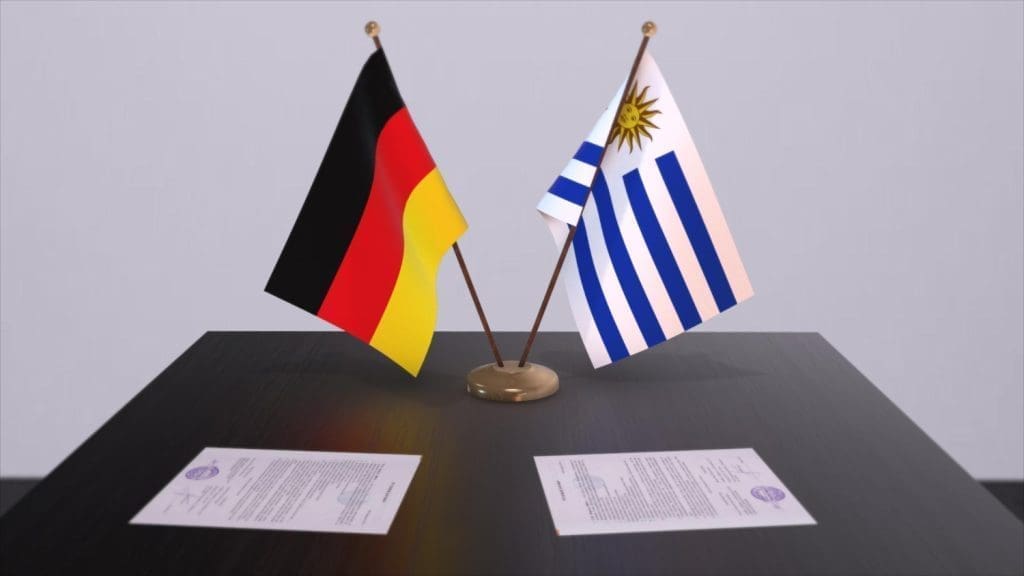
Uruguay has long been referred to as the “Switzerland of South America,” a moniker that resonates deeply with investors from the DACH region—Germany, Austria, and Switzerland. This reputation is built not only on the country’s banking stability and neutrality but also on a legal framework that is exceptionally welcoming to foreign capital. For German-speaking investors seeking to diversify their portfolios or find a second home, the Uruguayan property market offers a unique combination of security and simplicity.
Recent data confirms that the interest from European buyers is steadily increasing, driven by the desire for safe-haven assets outside the Eurozone. A critical factor driving this trend is the principle of equal standing under the law. In Uruguay, foreign nationals enjoy the exact same property ownership rights as local citizens, a policy that sets the nation apart from many other global investment destinations.
There are no requirements for special permits, prior residency, or local partnerships to acquire land or homes. Whether one is purchasing a beachfront apartment in Punta del Este or a rural chacra in the interior, the legal rights attached to the title are absolute. This lack of bureaucratic red tape is a significant draw for investors accustomed to complex regulatory environments.
However, while the legal framework is open, the procedural mechanics of buying property in Uruguay differ significantly from those in Germany, Austria, or Switzerland. Understanding these nuances is essential for a successful transaction. The process is transparent, but it relies on specific local protocols that require careful navigation by those unfamiliar with South American civil law.
Documentation and Remote Acquisition
One of the most surprising aspects for German-speaking buyers is the simplicity of the required documentation. To initiate and complete a property purchase, a valid passport is primarily all that is required. There is no immediate need to obtain a Uruguayan national ID card, known as the Cédula, to hold a title deed.
Furthermore, physical presence is not strictly necessary for the closing of the transaction. The Uruguayan legal system allows for the use of a notarized power of attorney. This means an investor in Berlin, Vienna, or Zurich can execute a purchase without crossing the Atlantic, provided they have trustworthy legal representation on the ground.
The Central Role of the Escribano
In the DACH region, the roles of legal counsel, notary, and land registry officials are often distinct and compartmentalized. In Uruguay, the Escribano (Public Notary) is the linchpin of the entire real estate transaction. This professional carries a much broader scope of responsibility than a typical notary in Europe.
The Escribano is responsible for conducting all title due diligence, a critical phase where the property’s history is scrutinized for the last 30 years. They verify that the property is free of liens, embargoes, or debt. Consequently, the buyer relies heavily on the competence and thoroughness of this single legal professional to ensure a clean title.
The Escribano also drafts the purchase contracts, acts as the withholding agent for certain taxes, and ensures the final deed is properly registered. Because of this centralized power, choosing the right notary is as important as choosing the right property. It is the primary safeguard against future legal complications.
Understanding Transaction Costs
German-speaking buyers are often detail-oriented regarding financial planning, and understanding the cost structure is vital. In Uruguay, a buyer should budget for total closing costs amounting to approximately 7% to 9% of the purchase price. This is a non-negotiable aspect of the investment calculation.
This figure includes the notary’s fee, which is typically 3% of the purchase price plus VAT (Value Added Tax). It also encompasses the real estate agency’s commission, which is standardly set at 3% plus VAT. While these fees may seem higher than in some European jurisdictions, they cover comprehensive services that ensure the security of the asset.
The Property Transfer Tax (ITP)
Included within the closing costs is the Property Transfer Tax, known locally as Impuesto a las Trasmisiones Patrimoniales (ITP). This tax is levied at a rate of 2% for the buyer and 2% for the seller. However, there is a distinct advantage in how this tax is calculated.
The ITP is based on the property’s fiscal or cadastral value, which is determined by the government, rather than the commercial market price. In many cases, the fiscal value is significantly lower than the actual sale price. This discrepancy can result in a tax burden that is lighter than a straight percentage of the transaction value would suggest.
The “Reserva” and Market Dynamics
The initial phase of a purchase in Uruguay involves the Reserva, or reservation agreement. This is a culturally specific step that differs from the preliminary agreements often seen in Europe. To take a property off the market, the buyer signs this document and deposits 10% of the purchase price, usually held in escrow by the notary.
This agreement is legally binding and sets the timeline for the due diligence period. It protects the buyer from “gazumping,” as the seller is legally precluded from entertaining other offers once the Reserva is signed. However, it also imposes strict penalties; if a buyer withdraws without a valid legal reason during the due diligence period, they risk losing the deposit.
Financing and Currency
A major divergence from the European market is the reliance on cash transactions. Obtaining a mortgage from a Uruguayan bank is notoriously difficult for non-resident foreigners. The banking system is conservative, and lending criteria for non-residents are stringent, often making local financing impractical.
Consequently, German buyers should be prepared to be cash buyers. Alternatively, many investors arrange financing in their home countries, leveraging assets in Europe to free up capital for the purchase in Uruguay. This approach is generally faster and more cost-effective than attempting to navigate the local credit system.
Furthermore, the real estate market in Uruguay is dollarized. The vast majority of property transactions are conducted in U.S. Dollars (USD). This provides a layer of stability and predictability, shielding foreign investors from the fluctuations of the local Uruguayan Peso.
Anti-Money Laundering Compliance
Uruguay adheres to strict international standards regarding financial transparency. As part of the purchasing process, buyers must provide proof of the legal origin of the funds used for the transaction. This is not merely a formality but a rigorous requirement enforced by the Central Bank and overseen by the Escribano.
German-speaking buyers must be prepared to submit bank statements, tax returns, or other documentation that traces the source of their capital. This “Know Your Client” (KYC) protocol is a standard part of the notary’s verification process and ensures the legitimacy of the market.
The Language Barrier
While the transactional framework is logical, the language barrier remains the most significant hurdle for DACH investors. All legal documents, including the title deed, the Reserva, and the final purchase agreement, are drafted exclusively in Spanish.
Even for those with a basic grasp of the language, legal Spanish utilizes specific terminology that can be easily misinterpreted. A misunderstanding of a clause regarding easements, tax liabilities, or boundary lines can have expensive consequences. Therefore, engaging German-speaking experts is not a luxury but a necessity.
Having a buyer’s agent who speaks German allows for clear communication of expectations and ensures that the buyer fully understands the legal obligations they are entering into. It bridges the gap between European expectations and South American reality.
The Essential View
At Team Haverkate, we view the influx of German, Austrian, and Swiss investors as a testament to Uruguay’s enduring stability. For the foreign investor, the “Switzerland of the South” is more than a marketing slogan; it is a reflection of a shared value system that prioritizes legal certainty, privacy, and property rights. The fact that the real estate market operates primarily in U.S. Dollars provides a hedge against currency devaluation, a feature that is particularly attractive given the economic volatility often seen elsewhere in the region. When we analyze the market trajectory, we see that properties purchased by DACH nationals tend to be held for the long term, contributing to price stability and a reduction in speculative volatility.
However, our insight into the daily mechanics of these transactions reveals that the greatest risk for German-speaking buyers is underestimating the cultural nuances of the negotiation and closing process. While the laws are written on paper, the execution of a deal relies on relationships and local knowledge. The role of the Escribano cannot be overstated; they are the gatekeepers of a safe investment. We often see buyers attempt to navigate this landscape with insufficient support, only to face delays regarding proof of funds or misunderstandings regarding the tax implications of the fiscal value versus market value. The key takeaway is that while Uruguay offers an open door to foreign capital, walking through that door successfully requires a bilingual guide who understands both the European mindset and the Uruguayan legal reality.
Conclusion
Entering the Uruguayan real estate market offers significant rewards for German-speaking investors, provided the approach is grounded in thorough preparation and professional guidance. The combination of equal legal rights and a dollarized economy creates a secure environment for capital, but the intricacies of the notary system and financial compliance demand expert navigation. It is imperative to understand that the legal and financial safeguards common in Germany or Switzerland are present in Uruguay, but they function differently.
To ensure your interests are protected, it is critical to avoid “Dual Agency,” a situation where one agent represents both the buyer and the seller, creating an inherent conflict of interest. Foreign buyers must seek out a reputable agency that exclusively represents them. Team Haverkate stands as a dedicated partner in this regard, offering exclusive buyer representation to ensure your investment is secure and your voice is heard. We can personally assist you in German, English, French, or Dutch, bridging the language gap and providing the clarity you need. Contact Team Haverkate today to begin your journey into the Uruguayan property market with confidence.