KEY POINTS
- Foreign Minister Mario Lubetkin called the papal visit one of Uruguay’s most extraordinary moments in 40 years.
- Roughly 70,000 free tickets for the prayer vigil were claimed in under three hours, reflecting strong public engagement.
- The event signaled political unity and generated international attention across Europe, Africa, Asia, the Gulf, and Latin America.
A three-day state visit by Pope Leo XIV has left Uruguay ‘positioned very strongly in the world,’ according to Foreign Minister Mario Lubetkin, who called it one of the most extraordinary moments the country has experienced in four decades.
The assessment came in a press briefing covered by El País and drew on events held Friday through Sunday in Montevideo and across the interior. Tens of thousands of people participated in activities that included a state visit, official speeches, a bilateral meeting between President Yamandú Orsi and the pontiff, and a session with Uruguayan ministers and Vatican representatives.
Lubetkin described the national mood as one of ‘happiness and pride,’ noting that participants at a business meeting spontaneously broke into applause for the weekend’s events. The foreign minister viewed that reaction as evidence of a natural movement reflecting the spirit of most Uruguayans.
Political and religious unity, he said, was a defining feature of the visit. President Orsi appeared alongside former presidents at official events, and Lubetkin credited months of coordination between Uruguayan authorities and the Vatican since Orsi delivered the invitation in Rome with producing what he called ‘the best of Uruguay.’
Institutional discussions covered themes the pope has placed at the center of his agenda: peace, vulnerable children, elder care, mental health, water management, land use, and artificial intelligence. Lubetkin said those issues align with the current government’s priorities and that Uruguay will intensify peace-related cooperation with the Vatican and other countries.
The minister called the pontiff one of the most important figures in the world and acknowledged the behind-the-scenes work of protocol teams, security personnel, police, and volunteers. The pope himself remarked on the recognition he received along the route to the airport, according to Lubetkin.
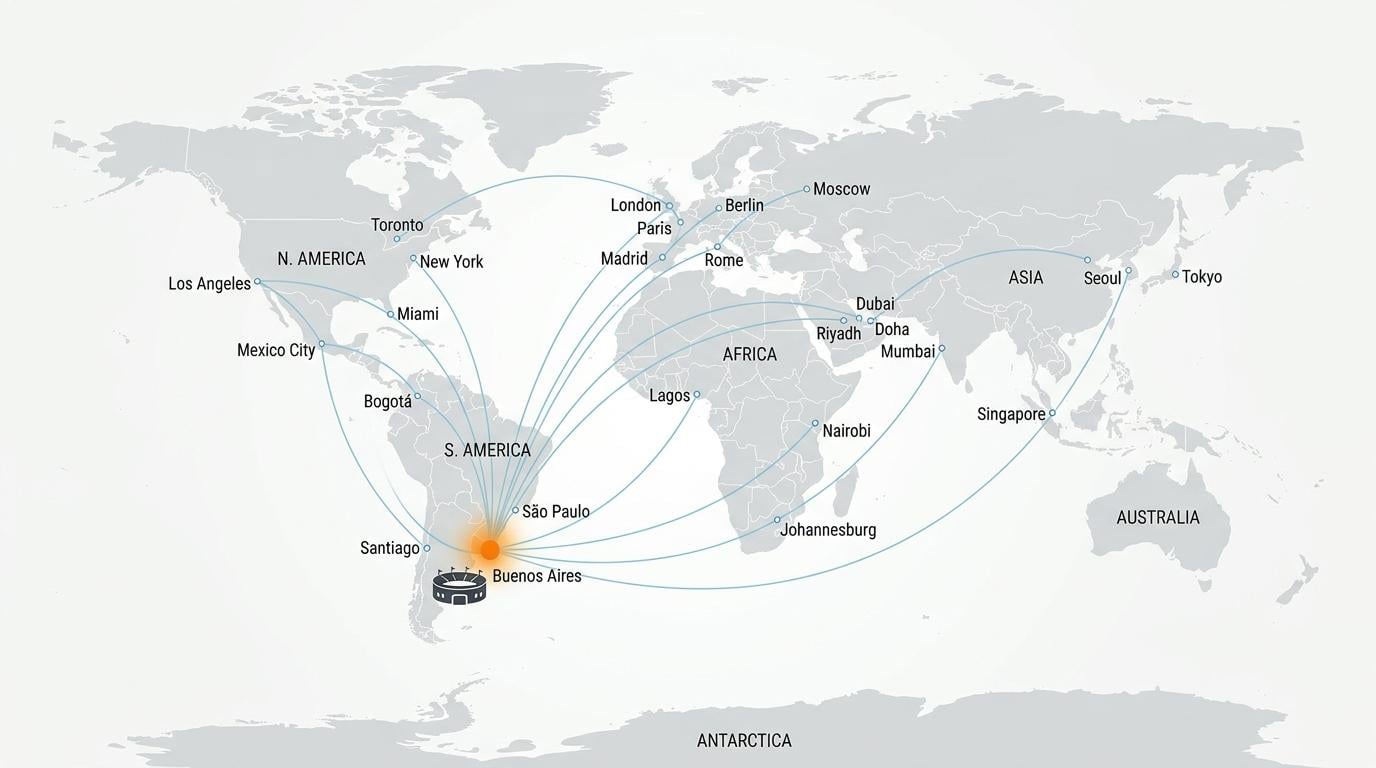
International reaction was broad. The foreign minister reported receiving messages from Europe, Africa, Asia, the Gulf countries, and Latin America, with television channels in multiple countries following the visit. He also referenced Cardinal Daniel Sturla’s mention of the 1930 World Cup history at Estadio Centenario as a moment that reinforced Uruguay’s global narrative.
The public response was equally measurable. Free tickets for the November 7 prayer vigil at Montevideo’s Centenary Stadium were claimed in under three hours, with roughly 70,000 tickets distributed. That turnout came even though Uruguay is Latin America’s most secular country, where about 35% of the population identifies as Catholic and more than half reports no religious affiliation.
Asked about the pope’s remarks in Plaza Independencia regarding the value of life—an implicit reference to abortion and euthanasia debates—Lubetkin declined to disclose details of the private conversation between Orsi and the pontiff. He clarified that differing government perspectives do not mean hidden topics.
Soft-Power Dividend and Investor Perception
For international investors and expats, the visit’s significance rests less on religious observance than on nation-brand reinforcement. A three-day event that proceeded without major incident, drew media coverage across several continents, and displayed institutional continuity among political parties signals a country capable of commanding global attention. That soft-power visibility, combined with Uruguay’s established legal security, secular governance, and near-total renewable electricity grid, strengthens the country’s appeal as a stable base for residency and capital in Latin America.