YOUR TAKEAWAYS
- Uruguay is a global leader in sustainable forestry, offering a stable and profitable environment for foreign investors to invest in timberland, a tangible “green asset.”
- The success of this sector is built on a robust legal framework that provides tax incentives and no restrictions on foreign land ownership, with returns driven by both the sale of timber and the underlying appreciation of the land itself.
- The industry is supported by global pulp mill investments and offers annualized returns between 8% and 14%, with pathways for investment including direct land ownership, turnkey management services, and forestry funds.
In an era where sophisticated investors are increasingly looking beyond traditional stocks and bonds for stable, inflation-hedged returns, a powerful asset class is thriving in the Uruguayan countryside: forestry. Positioned as a global leader in sustainable cellulose production, Uruguay offers a secure and highly profitable environment for investing in timberland—a tangible “green asset” that combines the security of land ownership with the biological growth of a valuable commodity.
Driven by massive, multi-billion-dollar industrial investments and supported by a robust legal framework, Uruguayan forestry presents a unique opportunity for foreign investors. With expected annualized returns between 8% and 14% and strong environmental credentials, it has become a premier global destination for those seeking to diversify their portfolios with a long-term, sustainable, and tangible asset.
Why Uruguay? A Foundation of Law and Profitability
Uruguay’s success as a forestry hub is no accident; it is built on a deliberate and stable foundation designed to attract long-term capital.
The Forestry Law (Ley Forestal)
The bedrock of the sector is Law 15.939, a comprehensive legal framework established to promote and protect forestry investment. This law provides strong guarantees, long-term stability, and significant tax incentives for land that is officially designated for forestry. Crucially for international investors, the law reinforces Uruguay’s open investment climate, placing no restrictions on foreign ownership of rural land, ensuring a secure and transparent process.
The Land Advantage (CONEAT)
The country’s land is evaluated for its productive potential using the CONEAT index. Prime agricultural and cattle-grazing land typically has a high CONEAT score. Forestry, however, thrives on soils that are often less suitable for intensive agriculture, meaning forestry land generally has a lower CONEAT score. This creates a significant advantage for investors, as the entry cost for acquiring suitable land is often more affordable than for prime agricultural real estate. The main forestry operations are concentrated in the departments of Rivera, Tacuarembó, Cerro Largo, and Durazno.
The Anatomy of a Forestry Investment
Investing in Uruguayan timberland is a long-term strategy with a clear and proven financial model.
The Asset and The Cycle
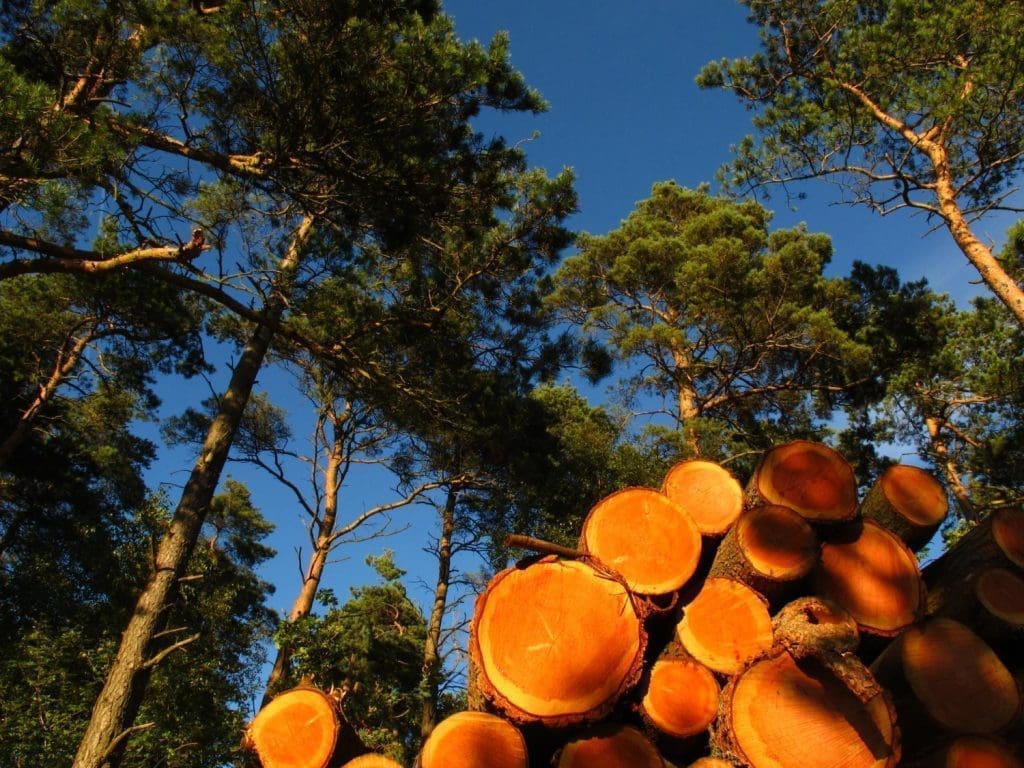
The primary species cultivated for commercial forestry is eucalyptus, prized for its rapid growth and suitability for high-quality hardwood pulp. The investment cycle, from planting to final harvest, typically ranges from 10 to 22 years, depending on whether the timber is destined for pulpwood or higher-value saw timber.
Dual-Stream Returns
Investors benefit from two distinct streams of return. The first is the income generated from the sale of the harvested timber to one of the country’s massive pulp mills. The second, and equally important, is the underlying appreciation of the land itself over the course of the multi-decade investment period. This dual return has historically allowed investors to achieve an impressive annualized Internal Rate of Return (IRR) of 8% to 14%.
A Global Hub for Sustainable Production
Uruguay’s forestry sector is anchored by the presence of global industrial giants like the Finnish company UPM and the joint venture Montes del Plata. These companies have invested billions of dollars in state-of-the-art pulp mills, creating a massive and constant demand for locally grown timber. This ensures that investors have a stable and reliable market to sell to upon harvest.
Furthermore, the sector boasts impeccable ESG (Environmental, Social, and Governance) credentials. Uruguayan forestry is highly regulated and must adhere to strict international sustainability standards, with most reputable operations achieving Forest Stewardship Council (FSC®) certification. This commitment to sustainability makes it an ideal fit for modern, responsible investment portfolios.
Pathways to Investment: How to Participate
Investors have several avenues to gain exposure to this asset class, catering to different capital levels and management preferences.
Direct Ownership
For institutional investors or high-net-worth individuals, the most direct approach is the outright purchase of large tracts of suitable land for developing a new forestry project.
Turnkey Management
This is a popular model for foreign investors. In this scenario, the investor purchases the land, and a specialized forestry management company handles the entire operational lifecycle—from soil preparation and planting to ongoing maintenance, fire prevention, and managing the final harvest and sale.
Forestry Funds and Syndicates
For those with less capital to deploy, forestry investment funds or private syndicates offer an accessible route. These vehicles pool capital from multiple investors to acquire and manage a portfolio of timberland assets, allowing smaller investors to participate in the sector’s growth.
Strategic Implications
Team Haverkate Analysis
From a strategic standpoint, Uruguayan forestry should be viewed as a distinct and powerful real estate asset class that offers exceptional portfolio diversification. Unlike residential or commercial properties whose values can be tied to local economic cycles, timberland is a biological asset that physically grows in size and value over time, largely independent of traditional real estate market fluctuations. Its returns are ultimately linked to the global commodity price for cellulose pulp and the physical growth of the timber. This makes it an excellent long-term, counter-cyclical addition to a sophisticated investment portfolio, providing a powerful hedge against inflation and market volatility.
While operational management can be handled by specialized turnkey companies, the initial acquisition of the land remains a critical real estate transaction with its own set of complexities. This is where expert guidance is paramount. An exclusive buyer’s agent plays the essential role of navigating the land acquisition process—identifying properties with the appropriate CONEAT classification and logistical access, conducting thorough legal due diligence to ensure a clean title, and negotiating a favorable purchase price. The agent’s primary function is to ensure that the foundational asset of the investment—the land itself—is acquired securely and at the right value, setting the stage for decades of successful and profitable growth.
Conclusion: A Secure, Long-Term Investment
Uruguayan forestry offers a rare combination of stability, profitability, and sustainability, making it one of the most compelling alternative asset classes available to international investors today. With a secure legal framework, proven returns, and strong ESG credentials, it represents a unique opportunity to diversify beyond traditional real estate and into a tangible, growing green asset.
However, the journey begins with a successful land acquisition. Navigating the nuances of rural real estate in Uruguay, even for a forestry project, is a complex undertaking that requires specialized, on-the-ground expertise.
Team Haverkate provides the expert guidance required for the crucial land acquisition phase of a forestry investment. As your exclusive representatives, we ensure your interests are protected as you identify and secure the ideal property to serve as the foundation of your long-term venture. Our multilingual team is ready to assist you in German, English, French, or Dutch.
To explore the potential of Uruguay’s green gold, contact Team Haverkate today.