Key Points
- Therapeutic materials like lime-washed walls and natural stone quiet the nervous system.
- Light is layered as a health tool, with circadian cues and red-light therapy zones.
- Wellness tech like hyperbaric chambers is embedded discreetly into the architecture.
Table of Contents
A Private Spa Is No Longer an Amenity
The most compelling residences in Uruguay are no longer defined by square meters or ocean frontage alone. A quieter shift is taking hold: the home is being recast as a private health instrument, where restoration is engineered into the architecture rather than imported as an afterthought.
This is not a fleeting wellness trend. It is a spatial strategy, one that fuses the calm of a personal spa, the precision of a medical sanctuary, and the sensory release of a nature retreat into a single domestic footprint.
In the countryside around Pueblo Edén, that idea opens a different kind of property conversation. Here, a residence could function as both a hideaway and a recovery environment, shaped by biophilic rhythm, therapeutic light, and indoor-outdoor transitions that support the nervous system rather than simply decorating it.
The Functional Grammar of a Wellness-Driven Residence
The dual-purpose wellness home begins with a refusal to separate style from physiological effect. Every material, aperture, and path of movement is treated as part of a continuous healing environment.
Materials That Quiet the Nervous System
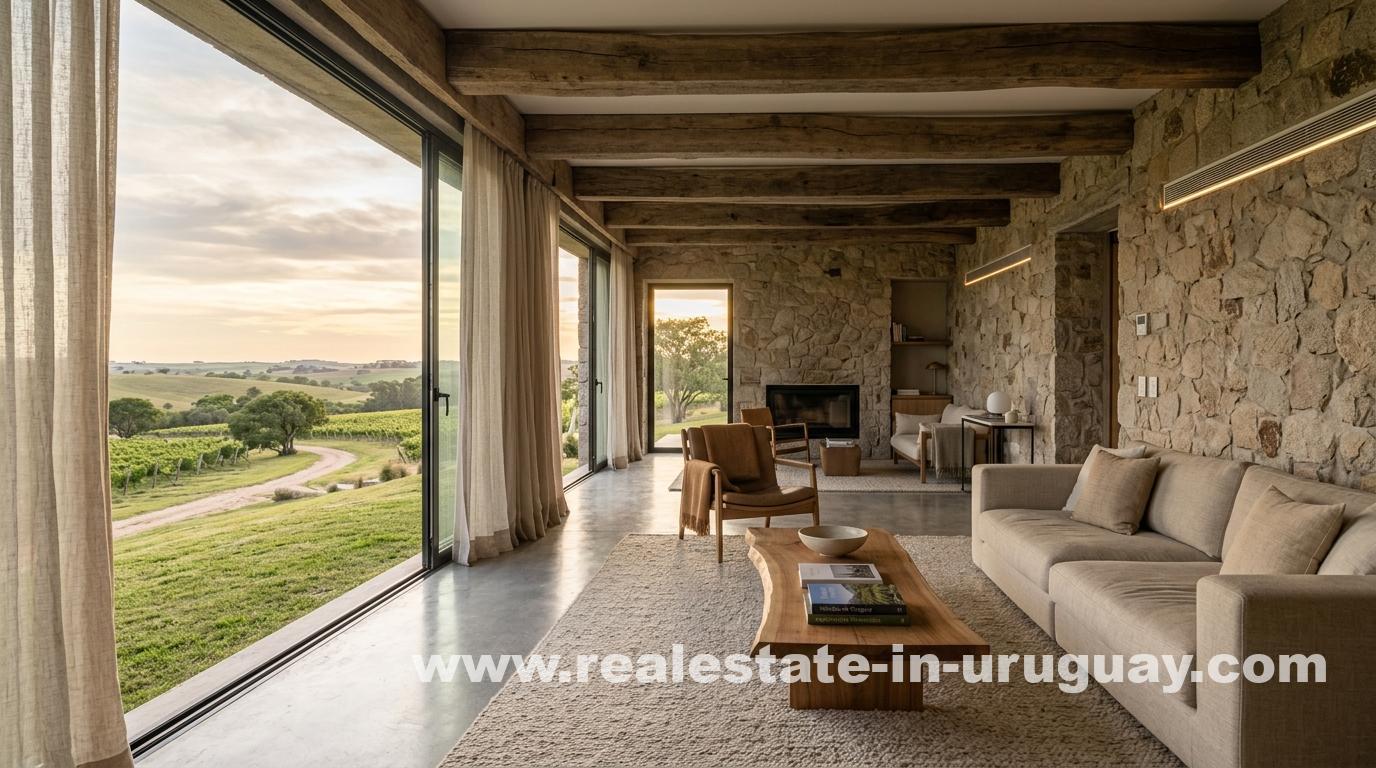
Therapeutic materials in this context are deliberately unclinical. The palette leans toward lime-washed walls, natural stone, unlacquered wood, and mineral plasters that let humidity move without becoming a liability.
These surfaces are chosen for their tactile temperature and acoustic softness. They avoid the glossy, hard-edged finishes that make a room feel like a treatment facility, while still supporting air quality and easy maintenance.
Light, Air, and the Outdoor Threshold
Light is treated as a medical tool. Layered illumination shifts from bright circadian cues in the morning to warm, indirect layers at night, with dedicated zones that can hold red-light therapy panels without turning a bedroom into a laboratory.
The indoor-outdoor threshold becomes the most important room in the house. A shade trellis with heat lamps extends the usable territory into cooler evenings, allowing the body to move between interior stillness and the scent of eucalyptus or grasses without breaking the architectural envelope.
Technology Without Clinical Coldness
Emerging health technologies are integrated as infrastructure, not display pieces. A hyperbaric oxygen chamber may require dedicated ventilation and power, while a red-light therapy bed benefits from acoustic isolation and controlled ambient temperature.
When these systems are embedded during construction, they disappear into millwork and wall assemblies. The result is a home that feels like a retreat, yet performs like a private clinic.
Team Haverkate’s Read on Uruguay’s Wellness Enclaves
Team Haverkate has observed a meaningful shift in the way international buyers evaluate Uruguay’s countryside. The old checklist, land size, exposure, proximity to José Ignacio or Punta del Este, is being joined by a far more personal question: how will this house regulate my sleep, my stress, and my recovery?
This is where the dual-purpose wellness space becomes a differentiator. A property that can quietly host a hyperbaric chamber or a red-light therapy suite offers an experiential advantage that standard rural estates simply do not carry.
For buyers considering Pueblo Edén, the appeal is not only silence and low density. It is the possibility of commissioning a bespoke compound that works as a private health retreat without shouting about it, sober luxury in its most functional form.
Team Haverkate maintains excellent relationships with local specialists experienced in therapeutic building systems and wellness infrastructure. Buyers interested in this approach are encouraged to reach out directly for an introduction.
Because this segment remains small and highly specific, it rewards early movers. A thoughtfully designed wellness residence in Uruguay’s interior can be positioned as a legacy asset: private enough for personal use, desirable enough for a future buyer who wants the same quiet regeneration.
A Sober-Luxury Retreat That Outlasts Trends
The most enduring versions of this idea will not announce themselves with spa branding or wall-to-wall medical equipment. They will be calm, durable homes whose value lies in the almost invisible way they support health over decades.
For Uruguay’s countryside, that means architecture built around light, air, material honesty, and the daily rhythm of moving between interior and landscape. It is a definition of luxury that has little to do with excess and everything to do with restraint.
International investors should be just as disciplined about representation. In Uruguay, dual agency occurs when one agent or brokerage represents both the buyer and the seller in the same transaction. That arrangement creates an unavoidable conflict of interest, because the intermediary’s compensation depends on closing rather than on securing the best possible position for either party. The result can be inflated valuations, undisclosed property liabilities, or a negotiation that quietly favors the seller even when the buyer believes they are protected.
Team Haverkate guides international buyers through these complexities with a clear-eyed, locally grounded perspective. Whether the goal is a wellness-centered countryside compound or a more conventional estate, the firm’s role is to ensure that design ambition and financial protection move in the same direction.
Frequently Asked Questions
What is a wellness-driven residence?
A wellness-driven residence is a home designed as a private health instrument, integrating spa-like calm, medical precision, and nature retreat qualities into the architecture itself rather than adding them as an afterthought.
How do materials contribute to a therapeutic home environment?
Therapeutic materials like lime-washed walls, natural stone, unlacquered wood, and mineral plasters are chosen for their tactile temperature, acoustic softness, and ability to regulate humidity, avoiding clinical finishes while supporting air quality and well-being.
What wellness technologies can be integrated without making a home feel like a clinic?
Technologies such as hyperbaric oxygen chambers, red-light therapy beds, and layered lighting systems can be embedded into millwork and wall assemblies during construction, so they perform like a private clinic while the home retains a retreat-like feel.
Why is Uruguay’s countryside becoming a destination for wellness-focused residences?
Areas like Pueblo Edén offer low density, silence, and biophilic surroundings, but international buyers increasingly seek homes that regulate sleep, stress, and recovery. A property designed for dual-purpose wellness provides an experiential advantage over standard rural estates.
What is sober luxury in the context of countryside retreats?
Sober luxury emphasizes restraint over excess, focusing on light, air, material honesty, and indoor-outdoor flow. In wellness residences, it means an understated, durable home that supports health over decades without loud brand or medical equipment displays.
What is dual agency in Uruguay and why is it a concern for buyers?
Dual agency occurs when one agent or brokerage represents both buyer and seller in the same transaction, creating an unavoidable conflict of interest because the intermediary’s compensation depends on closing rather than on securing the best deal for either party. This can lead to inflated valuations or undisclosed liabilities.
How does Team Haverkate support international buyers in Uruguay?
Team Haverkate guides international buyers through complexities like dual agency with a locally grounded perspective, helping them pursue wellness-centered countryside compounds or conventional estates while ensuring design ambition and financial protection move in the same direction.