In recent times, a shift has been observed as some Argentinians who had relocated to Uruguay are returning to their homeland. This trend is largely attributed to a narrowing tax gap between the two nations, as noted by experts. Nonetheless, Uruguay continues to hold an allure for many, with an increasing number of inquiries from Brazilian and European individuals seeking residency.

The presence of Argentinians in Uruguay is increasingly extending beyond the summer months. Numerous affluent families have moved from Argentina to reside in the coastal neighborhoods of Montevideo or the residential areas of Maldonado. This migration was initially spurred by a desire for lifestyle change or a more favorable tax regime. Business leaders and professionals have been at the forefront of this movement, which began during the pandemic and has persisted over time. However, various indicators suggest that the influx of Argentinians might be reaching a plateau, according to Forbes.
The previous administration led by Luis Lacalle Pou made explicit efforts to attract Argentinians through various statements and concrete measures. These included easing the requirements for obtaining fiscal residency in Uruguay and extending the tax holiday benefit for foreigners relocating to the country to ten years. During this period, Uruguay processed a minimum of 20,000 legal residencies for Argentinians, as reported by Carlos Enciso, who served as Uruguay’s ambassador to Argentina until February.
While the process of obtaining residency can take several months, foreigners can legally enter Uruguay shortly after initiating the process. This was particularly advantageous for many Argentinians during the pandemic when Uruguay had fewer health-related restrictions compared to the government at the time under Alberto Fernández.
Fiscal residency, however, is not merely a procedure but a status that determines where an individual must pay taxes. This status is either relinquished in the country of origin or acquired in the destination country by meeting certain requirements, such as the number of days spent in the country within a year. Some regulations for achieving fiscal status and paying taxes in Uruguay were adjusted by the government shortly after assuming office in June 2020. A decree reduced the asset requirement in the country—or the value of a business for those with investments—by more than half to obtain fiscal residency.
Additionally, a law was enacted to extend the tax holiday from five to ten years, granting foreigners who achieve fiscal residency a period during which they are exempt from income tax on earnings from deposits, stocks, bonds, or other financial investments. According to Patricia López Aufranc, a consultant at the Marval O’Farrell Mairal law firm, the most significant factor that encouraged high-net-worth Argentinians to move was the introduction of the “wealth tax” in Argentina at the end of 2020. This tax imposed up to a 3.5% rate on fortunes exceeding $2.5 million.
“There was an initial wave of the rich and famous, high-net-worth individuals who were retired or semi-retired, who were alarmed in Argentina,” explained the Argentine professional, who also decided to relocate to Uruguay during these years. The Argentine elite that moved to Uruguay includes prominent figures such as Mercado Libre CEO Marcos Galperín, oil tycoon Alejandro Bulgheroni, the so-called “soy king” Gustavo Grobocopatel, Globant founders Martín Migoya and Guibert Englebienne, and former Fiat Argentina president Cristiano Rattazzi.
Data from the Dirección General Impositiva indicates that during those years, approximately 2,500 fiscal residencies were requested annually—compared to 1,500 in 2019—although there is no information on the applicants’ nationalities.
Argentinian tax expert César Litvin, who runs the Lisicki, Litvin & Asociados firm in Argentina, said the Uruguayan government was “very approachable in attracting investments and welcoming new residents with favorable tax conditions.” Meanwhile, Argentina saw an increase in tax pressure, prompting Litvin to estimate that, in 2020, an Argentinian with $10 million in assets abroad could save approximately $250,000 in taxes by moving to Uruguay.
Changes in Maldonado and the Potential End of an Era
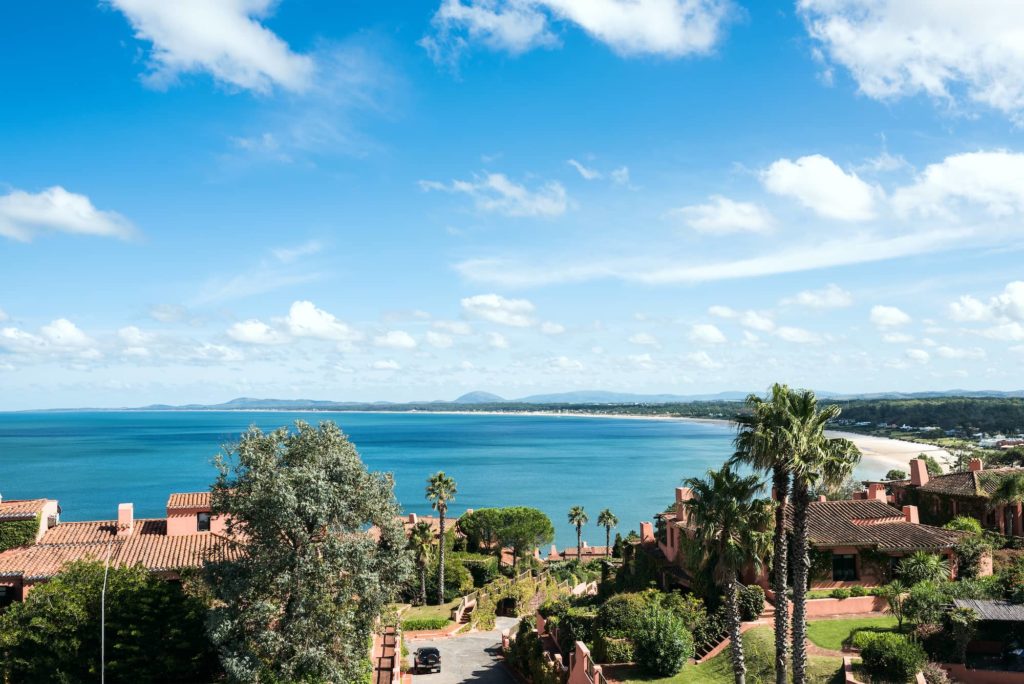
The Argentine wave was perhaps most strongly felt in Maldonado. In addition to the usual presence in Punta del Este, several new residents chose to build homes in coastal areas beyond Arroyo Maldonado, such as Manantiales, José Ignacio, or Balneario Buenos Aires.
This influx necessitated an expansion of public services in these regions, as noted by Jorge Piriz, Director of Environmental Management at the Maldonado Municipality. He also observed an increase in business openings, restaurants, and schools in various locations. The most indicative statistic of Maldonado’s growing permanent population, Piriz commented, is the “unprecedented” garbage collection figure in 2024, exceeding 100,000 tons. Over the past decade, real estate projects totaling more than 3.5 million square meters have been completed.
According to López Aufranc, some already-resident Argentinians began investing in real estate after the change in tax holiday law. The law allowed those already in Uruguay to extend their tax exemption for ten years by investing around $400,000. However, the wave of Argentinians is divided between those who genuinely relocated their lives to Uruguay and those who remain connected to Argentina for work or family reasons. Among the latter, López Aufranc mentioned there are individuals who “couldn’t endure” and know of cases where people have already returned or are planning to return to Argentina.
In many instances, these individuals are public-facing entrepreneurs who opposed Kirchnerism and find more alignment with Javier Milei, both Argentine lawyers agreed. Additionally, there are tax motivations for returning, as the Milei government introduced a measure for high-net-worth citizens, allowing them to prepay five years of wealth tax at a more favorable rate.
“The Argentine government’s idea is to bring back the entrepreneurs who left, which is why they have lowered the tax burden,” Litvin pointed out, suggesting that “there will no longer be an exodus of Argentinian residents to Uruguay.” Nonetheless, he stated that the tax holiday benefit remains a motivator for relocating residency, as the tax gap between the two countries has narrowed, but Uruguay’s regime remains more favorable.
In López Aufranc’s view, there is “far less temptation for Argentinians to move to Uruguay” now, although she, like Fischer, noted a rise in inquiries and residency requests from Brazilians. Both professionals agreed that Uruguay has the opportunity to attract a new profile of foreign entrepreneurs, typically middle-aged individuals who decide to relocate with their families to work remotely. In line with this, a free trade zone offering services in Punta del Este is expected to be inaugurated by the end of the year, which Fischer views as crucial since “years ago, Argentinians claimed they couldn’t find a place to open an office” in Maldonado’s main resort.
For López Aufranc, Punta del Este is now potentially more appealing “for the needs of young executives” due to the “high level of international schools” and access to various services. Conversely, she noted that for the older population who might plan their retirement in Uruguay, there is a “deficit” in “high-quality medical services,” a factor they consider when deciding where to live.
Team Haverkate from Real Estate in Uruguay thinks that Argentinians will continue to come, but “the potential” lies in attracting “more Brazilians and Europeans,” highlighting “the safety and fiscal advantages that Uruguay offers as a destination.”
Key Takeaways
Uruguay’s real estate market continues to be an attractive option for foreign investors, particularly those seeking a favorable tax environment. The changes implemented by the Uruguayan government have made it easier for potential residents to attain fiscal residency, thus creating new opportunities for investment in the region.
This evolving landscape not only presents opportunities for investors but also brings about the possibility of enhancing community diversity and economic growth, particularly in areas like Maldonado. As Uruguay continues to develop its infrastructure and public services to accommodate new residents, the country may become an increasingly appealing destination for a broader range of international investors, including middle-aged professionals and families seeking a quality lifestyle combined with work flexibility.
While the appeal for Argentinians may be experiencing a shift, the growing interest from Americans, Brazilians and especially Europeans signifies a promising new wave of potential residents. Uruguay’s focus on fostering an environment conducive to international business and remote work could further solidify its position as a lucrative and welcoming real estate market.
Understanding Uruguay’s real estate market involves detailed groundwork. Equip yourself with knowledge on legal and financial aspects to avoid common mistakes. As a foreign buyer, you want to make sure in Uruguay, you work with a reputable agency that doesn’t practice “Dual Agency” which means one agent working both sides in a transaction. Team Haverkate makes sure that they only represent their client, the buyer, and not the seller as well. Reach out to Team Haverkate for more information and tailored assistance.