Key Points
- Warm minimalism combines neutral warm tones with intentional texture layering for a lived-in feel.
- Natural materials like stone, wood, linen, and rattan replace synthetics, creating a tactile environment.
- Each room should have a curated selection of high-quality pieces, with at least 30% of surfaces left empty.
- Strategic accent colors like olive green or terracotta add personality, while layered lighting at 2700-3000K enhances warmth.
Warm Minimalism in Uruguay’s Coastal Homes
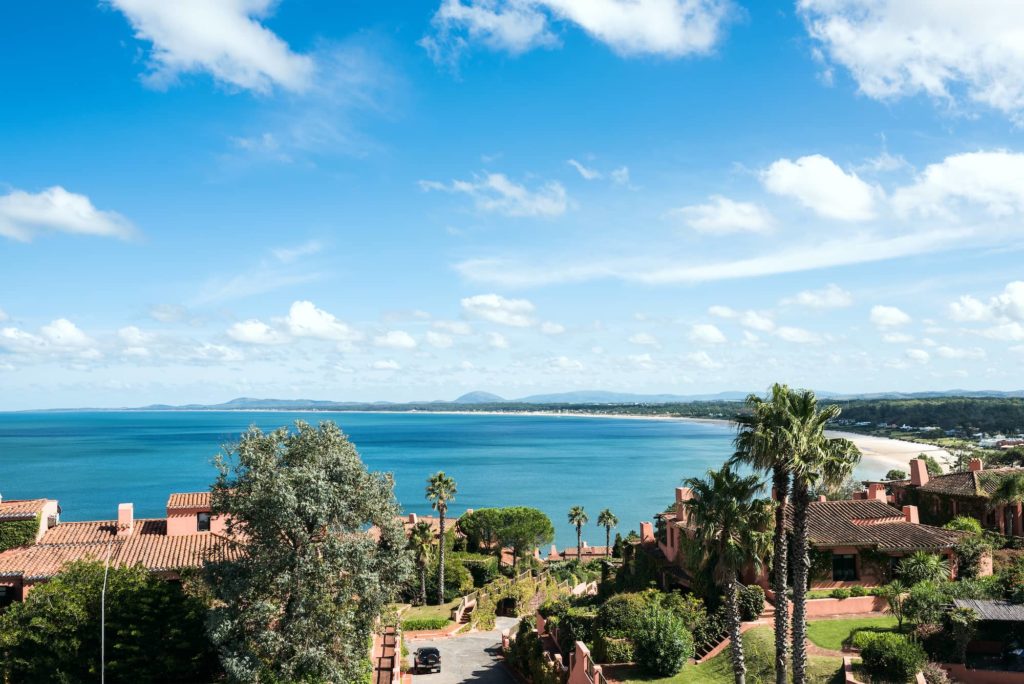
Warm minimalism is emerging as a defining design philosophy for 2026, offering a remedy to the sterile white boxes that have dominated beach architecture. For Uruguay’s coastline — from the rugged dunes of José Ignacio to the manicured gardens of Punta del Este — this approach proposes a nuanced interplay of natural materials, soft tonalities, and deliberate curation. It is less a style and more a discipline: knowing exactly where to stop.
This article explores how warm minimalism can reimagine coastal properties in Uruguay, balancing restraint with richness to create homes that feel both serene and deeply personal.
Table of Contents
The Principles of Warm Minimalism for the Uruguayan Coast
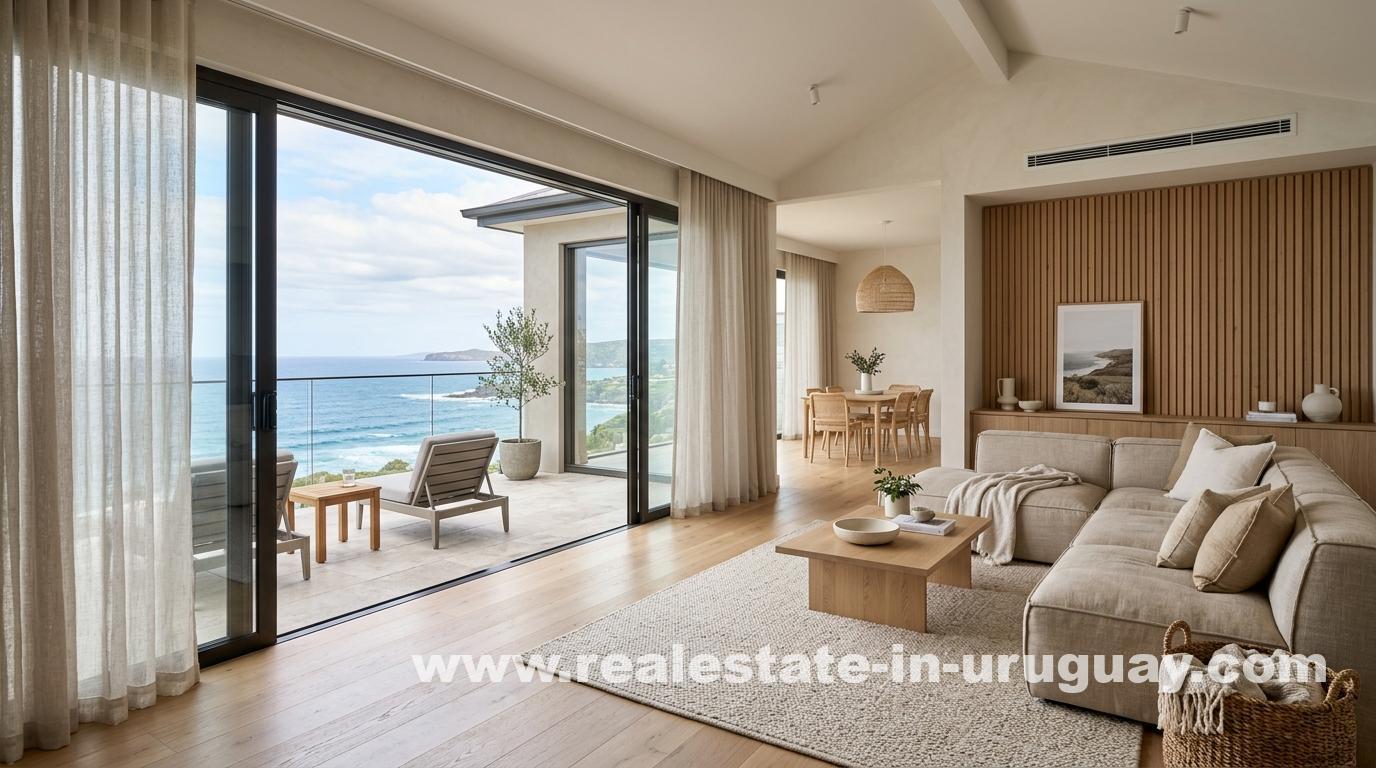
At its core, warm minimalism rejects the notion that minimalism must be cold. Instead, it builds on a foundation of warm neutrals — creamy whites, ivories, soft beiges, oatmeal tones — and introduces earthy accents sparingly. Terracotta, burnt orange, mauve, or soft sage green can add life without overwhelming the eye.
Texture becomes the primary tool for depth. According to The Spruce, layering natural materials like linen, cotton, leather, wool, rattan, and jute is key, with synthetics deliberately avoided.
Furniture shapes trend toward organic, rounded forms that soften clean architectural lines. Each piece must earn its place — sofas with hidden storage, sideboards that double as display surfaces, and ottomans that conceal clutter. Negative space is not wasted; it is breathing room.
In kitchens and bathrooms, warm minimalism translates to simple cabinet lines, slim shaker fronts, and natural stone countertops. Warm metal hardware in bronze or brushed nickel replaces polished chrome. Wall colors stay muted, with ceilings occasionally painted in a deeper tone — a technique called ‘colour capping’ that creates a cocooning effect.
Lighting is layered: ambient, task, and accent sources at different heights, with bulbs tuned to 2700–3000K. The goal is a soft glow, never a single overhead fixture that flattens the space.
Why Warm Minimalism Aligns with Uruguay’s Market — A Team Haverkate Insight
From our vantage point advising international buyers seeking second homes in Uruguay, we have observed a shift away from the region’s historical preference for stark, all-white interiors. Modern buyers — particularly those from Europe and North America — increasingly value authenticity and longevity over trend-driven spectacle.
Warm minimalism responds directly to this demand. According to NewHomeSource, it lowers maintenance requirements (fewer decorative objects to dust), relies on locally available natural materials, and ages gracefully. Research from Frontiers in Psychology, cited in trend analyses, indicates that warm neutral environments reduce visual fatigue and can even lower cortisol levels — a compelling argument for a vacation home meant to restore.
For a beach property in José Ignacio, this philosophy translates to a home that feels like a permanent retreat rather than a sterile showpiece. The layered textures — a chunky knit throw, a reclaimed wood bench, a ceramic vase — create a sense of accumulated history, even in a new construction. It also aligns with the growing wellness-oriented travel market, where design supports unplugging and mindfulness.
Moreover, the principles of warm minimalism dovetail with Uruguay’s existing design culture, which favors honest materials and understatement. The trend is not a foreign import but a refinement of what many local architects already practice: restraint elevated by sensory richness.
The Future of Sober-Luxury Living in Uruguay
Warm minimalism offers a coherent framework for property owners who want their coastal homes to feel timeless, not trendy. Its focus on quality over quantity, on texture over decoration, and on calm over clutter aligns precisely with sober-luxury values. For international investors, this means a property that will retain its aesthetic appeal for years, reducing the need for frequent overhauls.
But there is a practical caveat for buyers. In Uruguay’s real estate market, the practice of dual agency — where a single agent represents both buyer and seller in a transaction — creates an inherent conflict of interest. The agent is legally obligated to maximize the price for the seller, which can inflate valuations and conceal liabilities from the buyer. Always insist on exclusive buyer representation or a verified agency that discloses its role, ensuring your interests are protected throughout the purchase process.
As warm minimalism redefines what a coastal home can be, Team Haverkate remains a trusted guide for international buyers navigating Uruguay’s market. With local expertise across all key destinations, from José Ignacio to Punta del Este, we help clients find properties that embody both elegant design and sound investment — without the conflicts that undermine so many transactions abroad.
Frequently Asked Questions
What is warm minimalism?
Warm minimalism is a design philosophy that combines minimalist restraint with warm neutrals (creamy whites, ivories, soft beiges), earthy accents (terracotta, burnt orange, mauve, sage green), and rich textures (linen, cotton, leather, wool, rattan, jute). It emphasizes organic forms, negative space, and layered lighting to create serene, inviting interiors.
Why is warm minimalism particularly suitable for Uruguay’s coastal properties?
Warm minimalism aligns with Uruguay’s existing design culture of honest materials and understatement. It lowers maintenance, relies on locally sourced natural materials, ages gracefully, and creates a restorative retreat atmosphere that appeals to international buyers seeking authenticity and longevity over trend-driven design.
How does warm minimalism differ from traditional minimalism?
Unlike traditional minimalism, which can feel cold and sterile, warm minimalism uses warm neutrals, earthy accents, and layered textures to add depth and comfort. It rejects stark white in favor of creamy tonalities and soft lighting, making spaces feel grounded and inviting while maintaining clean lines and restraint.
What are the key materials and textures used in warm minimalist interiors?
Natural materials dominate: linen, cotton, leather, wool, rattan, jute, burl wood, and natural stone. Textures like chunky knits, reclaimed wood, and ceramic add depth. Hard surfaces like kitchens and bathrooms feature simple cabinet lines, slim shaker fronts, and warm metal hardware in bronze or brushed nickel.
How does warm minimalism relate to sober-luxury living in Uruguay?
Warm minimalism embodies sober-luxury values by focusing on quality over quantity, texture over decoration, and calm over clutter. It ensures timeless appeal, reducing the need for frequent renovations. This aligns with the preferences of international investors seeking properties that retain aesthetic and investment value.
What should international buyers be aware of regarding dual agency in Uruguay’s real estate market?
In Uruguay, dual agency (one agent representing both buyer and seller) creates a conflict of interest, as the agent must maximize the seller’s price. Buyers should insist on exclusive buyer representation or a verified agency that discloses its role to ensure their interests are protected and valuations are fair.
How can warm minimalism be applied in kitchens and bathrooms?
Kitchens and bathrooms embrace simple cabinet lines, slim shaker fronts, and natural stone countertops. Warm metal hardware (bronze or brushed nickel) replaces polished chrome. Wall colors remain muted, and ceilings may be painted in a deeper tone (‘colour capping’) to create a cocooning effect. Lighting is layered with warm bulbs (2700–3000K).