Key Takeaways
- WorkNomads’ 200-unit coworking and housing building in +Colonia targets a 2029 opening, following Praxis’s $1 billion pledge and 500 units already under construction by Argencons and Criba.
- A new free trade zone in Colonia offers tax breaks, strengthening the case for tech, legal, and financial professionals to live in Uruguay while serving Buenos Aires clients.
- Uruguay’s infrastructure push—including a $14 million Carrasco airport expansion and EU-Mercosur trade gains—supports long-term real estate demand in established locations like Colonia.
Table of Contents
A 200-Unit Cross-Border Bet Is Finally Moving in Colonia
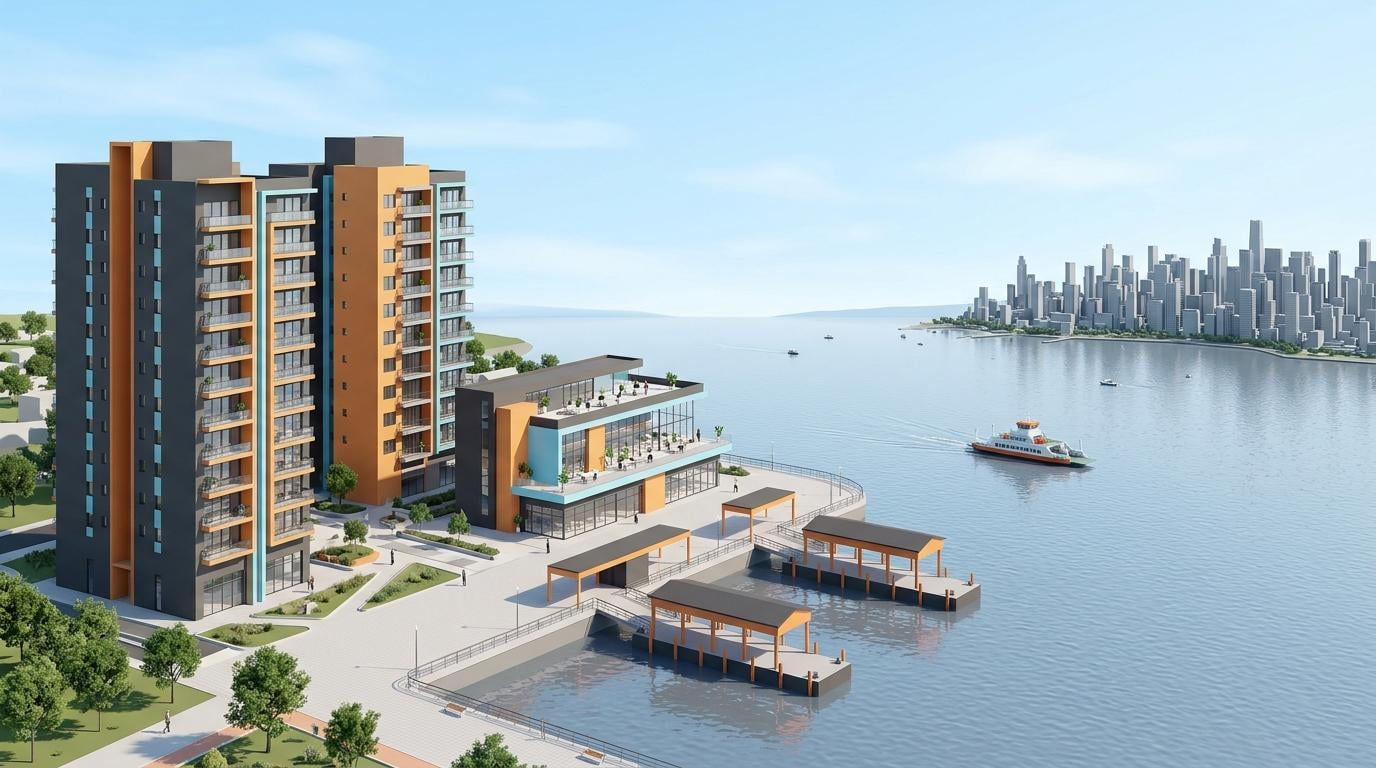
A 200-unit coworking and housing building is now set to rise inside +Colonia, the open-city development across the river from Buenos Aires. WorkNomads, a Bulgaria-based staffing company for remote workers, plans to begin construction next year and open the building in 2029.
That makes the company the second major foreign commitment to the project in recent months. Online community Praxis, backed by investors in Silicon Valley, earlier pledged $1 billion to build a separate residential and tourism complex within the larger master plan.
Bloomberg Línea first reported the 2029 opening target. The timeline matters because +Colonia spent years moving through permits and skepticism; built form now appears close enough to change how buyers and renters price the area.
How +Colonia Works: Open Streets, Ferry Commutes and a New Free Trade Zone
According to Bloomberg Línea, when developer Eduardo Bastitta formally announced +Colonia in October 2022, Argentina’s previous government was printing money, annual inflation was running near 100%, and the economy was in recession. Uruguay was drawing wealthy foreigners with generous tax incentives, and a planned modern city looked like a natural refuge.
Four years later, the conditions have shifted. Argentine president Javier Milei removed exchange controls for citizens, liberalized parts of the economy, and brought inflation down. The new stability is still fragile, but it raises a direct question: does a cross-river refuge still need to exist?
The project’s structure suggests it can compete on more than fear. +Colonia’s master developer builds roads, utilities, and basic infrastructure, then sells parcels to real estate firms that construct and market the apartments.
Argencons and Criba Real Estate now have five buildings under construction with nearly 500 units. Roughly 400 of those units should be finished by the end of next year, with the remainder following in 2028.
Bastitta chose an open city model instead of the gated communities common around Buenos Aires. People can circulate freely, which changes both the urban feel and the legal structure of ownership.
WorkNomads founder Katrien Meire said her company chose discreet Colonia over Punta del Este because it is still at the gates of Buenos Aires while remaining inside a country with political and economic stability. Her firm also looks for less-known destinations, rather than the most visible beach brand.
A separate free trade zone opened in Colonia last week, offering tax breaks to businesses. That strengthens the case for tech, legal, and financial services professionals who might want to live on one side of the river and keep clients on the other.
Our Read: Uruguay’s Quiet Pull on Buenos Aires Professionals and Real Assets
We read the WorkNomads commitment as a positioning signal rather than a single project bet. It confirms that Colonia is being priced as a place to live and work, not only a weekend tourism stop.
The most serious counterargument sits across the river. Buenos Aires is less chaotic than it was in 2022, and a young professional could reasonably ask why not stay. That tension is real, and any investor should test it before assuming demand will flow eastward indefinitely.
What keeps the thesis intact is decentralization. Juan Manuel Fernández, commercial coordinator at InfoCasas, makes a simple point: companies and households have been leaving central Buenos Aires for new urban areas near the capital. The center remains congested, and +Colonia offers another destination for that outward movement, especially for those who value Uruguay’s institutions.
Farther up the coast, the logistics picture reinforces the same trend. A $14 million expansion opened at Carrasco International Airport on November 18, adding about 10,000 square meters of warehousing, e-commerce, and cargo capacity under a free-airport regime. The full platform now covers roughly 35,000 square meters, and Montevideo already functions as a delivery point for Buenos Aires, São Paulo, and Santiago within 24 to 48 hours.
Trade agreements reinforce the same direction. The EU-Mercosur interim deal has been provisionally applied since May 1 of this year. Uruguay is projected to gain about 0.61% in GDP from the agreement, with bilateral trade rising roughly 37% under current alignment and potentially 70% with deeper regulatory convergence.
OECD figures put Latin American and Caribbean infrastructure investment at 1.5% of GDP in 2023, against an estimated 3.1% needed each year through 2030. That gap matters for real estate because logistics, roads, and port capacity are early indicators of where residential and commercial demand will form.
The Longer View: Infrastructure, Tax Incentives and a Different Kind of Uruguayan Growth
Colonia is starting to look less like a ferry stop and more like a small business center with residential capacity attached. The free trade zone, international developers, and remote-work infrastructure are combining with a location that was previously known mostly as a day-trip destination.
There is one risk on the buying side worth flagging. In Uruguay, dual agency arises when the same broker or agency represents both seller and buyer in a single transaction. The conflict is structural: the fee is usually tied to the seller, but the advisory duty should sit with the buyer.
International investors should ask directly whether their agent would also represent the seller, and they should require written clarity before signing a reservation or a purchase promise. Without that clarity, an investor can end up with a valuation that flatters the developer, a negotiation position that has already been priced away, or hidden conditions that surface only after closing.
For investors watching +Colonia from abroad, the signal is that Uruguay is adding infrastructure and tax advantages around established lifestyle locations, not just building beach towers. Team Haverkate helps international buyers and investors test those specific developments before committing, from construction timelines to contract terms, and we maintain close relationships with vetted local tax and legal specialists for anyone structuring a cross-border entry or residence position.
Frequently Asked Questions
What is +Colonia and where is it located?
+Colonia is an open-city real estate development in Colonia, Uruguay, located across the river from Buenos Aires. It is built on an open-street model rather than a gated community, meaning people can circulate freely. The master developer builds roads, utilities, and basic infrastructure, then sells parcels to real estate firms that construct and market the apartments. Argencons and Criba Real Estate currently have five buildings under construction with nearly 500 units.
Who is building in +Colonia and when will units be ready?
WorkNomads, a Bulgaria-based staffing company for remote workers, plans to begin construction on a 200-unit coworking and housing building next year and open it in 2029. Online community Praxis, backed by Silicon Valley investors, earlier pledged $1 billion for a separate residential and tourism complex. Argencons and Criba Real Estate have five buildings under construction with nearly 500 units, roughly 400 of which should be finished by the end of next year, with the remainder following in 2028.
Why would Buenos Aires professionals move to Colonia instead of staying in Argentina?
The case rests on decentralization rather than fear. Companies and households have been leaving central Buenos Aires for new urban areas near the capital, and +Colonia offers another destination for that outward movement, especially for those who value Uruguay’s political and economic stability. A new free trade zone in Colonia also offers tax breaks to businesses, strengthening the case for tech, legal, and financial services professionals who want to live on one side of the river and keep clients on the other.
How does the new Colonia free trade zone affect investors and remote workers?
A separate free trade zone opened in Colonia last week, offering tax breaks to businesses. Combined with the open-city model and remote-work infrastructure, it supports tech, legal, and financial services professionals who want to live in Uruguay while serving clients across the river. It also reinforces the shift of Colonia from a day-trip ferry destination toward a small business center with residential capacity attached.
What infrastructure and trade developments support real estate demand in Uruguay?
A $14 million expansion opened at Carrasco International Airport on November 18, adding about 10,000 square meters of warehousing, e-commerce, and cargo capacity under a free-airport regime, bringing the full platform to roughly 35,000 square meters. Montevideo already functions as a delivery point for Buenos Aires, São Paulo, and Santiago within 24 to 48 hours. The EU-Mercosur interim deal has been provisionally applied since May 1, with Uruguay projected to gain about 0.61% in GDP and bilateral trade rising roughly 37%.
What is dual agency and why should buyers in Uruguay watch for it?
Dual agency arises when the same broker or agency represents both seller and buyer in a single transaction. The conflict is structural: the fee is usually tied to the seller, but the advisory duty should sit with the buyer. International investors should ask directly whether their agent would also represent the seller and require written clarity before signing a reservation or purchase promise. Without that clarity, buyers risk a valuation that flatters the developer, a negotiation position already priced away, or hidden conditions surfacing after closing.
Is +Colonia a good investment given Argentina’s improved economy?
The counterargument is real: Buenos Aires is less chaotic than in 2022, and a young professional could reasonably ask why not stay. However, the thesis remains intact because demand is driven by decentralization and Uruguay’s institutional stability rather than Argentine instability alone. Investors should test the specific development before committing, reviewing construction timelines, contract terms, and agency arrangements, since built form is now close enough to change how buyers and renters price the area.