Key Takeaways
- Premium new-build apartments in Punta del Este are priced $6,000–$9,000/m², with Signature at the Sea’s 265 m² first-line residence at Parada 31 listed at $1.8 million.
- Most residential units close at 90%–94% of asking price (a 6%–10% buyer discount) and sit 130–160 days on market, while total buyer closing costs run 8%–12% of purchase price.
- 2027 rental asking rates are already 10%–20% above last summer, yet average annual short-term occupancy of 35%–45% means investors should underwrite long-term cash flow, not peak-summer rents.
Table of Contents
New-Build Pricing Nears $9,000 as Punta del Este Becomes a Year-Round Market
Premium new-build apartments in Punta del Este are now being priced from $6,000 to $9,000 per square meter, with the upper bound concentrated in La Brava and first-line ocean positions. The figures, drawn from developer pricing cited in Ambito’s market coverage, coincide with a broader repricing: rental asking rates for the 2027 season are already running 10% to 20% above last summer in dollar terms.
Behind those numbers sits a structural shift rather than a seasonal spike. Maldonado expanded its population 23.7% between 2011 and 2023, the fastest of any department, while remote workers, entrepreneurs and the silver generation have joined traditional summer buyers.
For international investors, the signal is clear: Punta del Este is being repriced as a year-round residential market, with premium inventory concentrated at the top of the cycle.
Inside the Pricing Mechanics Behind La Brava’s Premium Repricing
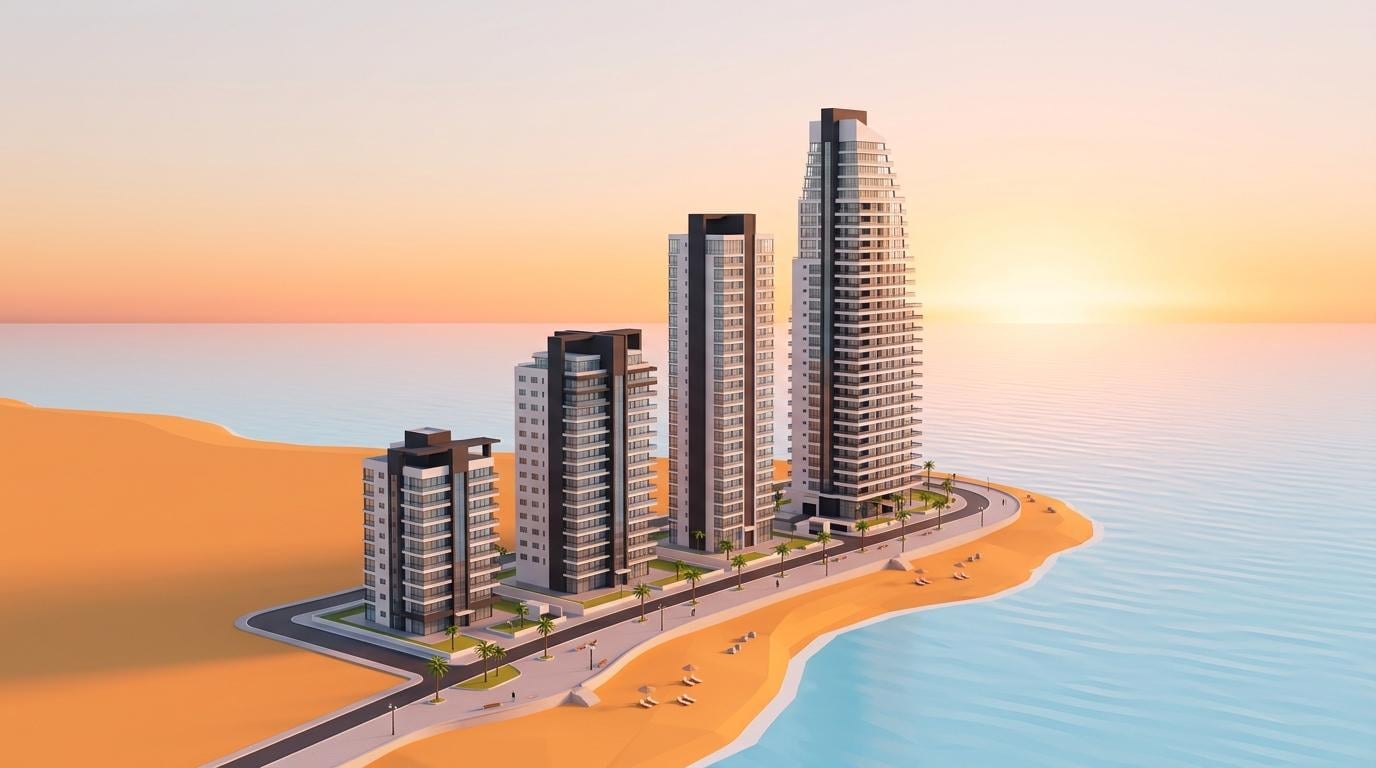
The high end of the new-build market is anchored in La Brava, where ocean views still command the strongest premium. According to Ambito, Signature at the Sea, a 265-square-meter first-line residence at Parada 31, is listed at $1.8 million. The twin-tower project, designed by Brazilian architect Marcio Kogan and his MK27 studio, required an investment of close to $50 million and opened last year.
Developers are explicitly positioning this inventory around year-round use. The project’s sales director has described the strategy as offering world-class amenities that support the destination’s shift away from a purely seasonal calendar. Architecture, interior design and natural integration now rank alongside size and finish among buyer priorities.
Demand is also broadening beyond the traditional beachfront buyer. Roosevelt and areas near Punta Shopping maintain sustained interest because they offer practical daily living outside the high season. At the same time, between 50% and 55% of closed purchases in Maldonado during 2025 and 2026 came from Argentine buyers.
Rental and Connectivity Signals
The 2027 rental season is already repricing in dollars. Operators are seeing initial asking-rate increases of 10% to 20% year over year, with premium rentals expected to move above that band. In parallel, connectivity is thickening: more than 40 weekly flights are expected from Buenos Aires alone during summer, alongside new regional links such as the direct Montevideo to Punta Cana route.
The former Enjoy property is also being repositioned as Fasano Peninsula, with planned investment of up to $500 million. That conversion extends the supply-side story beyond residential units and into branded hospitality infrastructure capable of anchoring year-round visitor traffic.
Team Haverkate’s Read: Selectivity, Discounts, and the Year-Round Demand Engine
Team Haverkate’s view is more selective than the headline price range suggests. Transaction data we track indicates the market remains positive but not uniformly liquid. Most residential units sell at 90% to 94% of asking price, implying a buyer discount of 6% to 10%, while ordinary apartments typically spend 130 to 160 days on the market. Renovated sea-view apartments move faster; larger houses and luxury villas often take considerably longer.
This nuance matters precisely because the premium new-build segment is expanding. New-build inventory represents an estimated 20% to 30% of visible residential sales listings, with the strongest activity in San Rafael, Playa Mansa, Playa Brava, Roosevelt and Aidy Grill. Well-located apartments in those corridors have posted estimated price growth of 8% to 15% over the past two to three years, but the gains are not automatic.
Short-term rental demand remains large but softer in early 2026 than a year earlier, with lower official visitor counts and spending. Average short-term occupancy across the year sits between 35% and 45%, concentrated heavily in January and February. That seasonal reality reinforces why buyers should underwrite using long-term cash-flow assumptions rather than peak-summer rents.
The main contrarian scenario is not a crash but a liquidity slowdown. A weaker Argentine or Brazilian currency, softer tourism and too much new apartment supply arriving at once could push normal stock flat to 5% lower, with overpriced luxury villas and older high-expense buildings falling by more. This is why selectivity, not scarcity, is the defining feature of the current market.
Transaction Costs and Execution Risk
Execution costs also define the real entry point. Total buyer closing costs in Uruguay typically run 8% to 12% of the purchase price, composed of the 2% real estate transfer tax on cadastral value, notary fees, registry charges and professional services. New-build purchases from a developer can carry different VAT treatment, while resale residential property generally does not attract VAT.
For international buyers, the legal framework is open but practical execution carries medium difficulty. Team Haverkate maintains excellent, vetted local contacts for property transaction due diligence, tax and notarial work, and investors considering a purchase are encouraged to ask for a direct introduction.
The prevailing 12-month outlook from our market read is stable to moderately positive: normal apartments may rise 1% to 4% in dollar terms, prime apartments 3% to 6%, and many houses remain flat. Over three to five years, well-positioned year-round neighborhoods could compound at 2% to 5% annually in US dollars, with regional demand from Argentina and Brazil the key variable.
The 2027 Horizon: From Seasonal Play to Full-Time Harbor
Punta del Este enters the 2027 season with a more durable residential base than at any point in the last two decades. Population growth, year-round services, airport connectivity and $500 million in hospitality repositioning are converting what was once a summer destination into a full-time harbor for families, remote workers and cross-border capital.
Yet the new pricing does not reduce execution risk. In a market where most units sell below asking and days on market stretch beyond four months, investors need independent representation. Dual agency, where a single agent or brokerage attempts to represent both buyer and seller in the same transaction, creates a structural conflict of interest. The buyer can face inflated valuations, hidden building liabilities or negotiation guidance that protects the seller’s commission rather than the investor’s capital. International purchasers should avoid this arrangement and retain advisers whose fee structure is tied exclusively to the buyer’s side.
Team Haverkate works with international investors to navigate Punta del Este’s premium residential market with that buyer-side discipline. From year-round neighborhood selection and new-build due diligence to rental underwriting and closing-cost structuring, our role is to translate headline pricing into an executable investment thesis that fits a client’s actual holding period and risk profile.
Frequently Asked Questions
How much do premium new-build apartments cost in Punta del Este?
Premium new-build apartments in Punta del Este are priced from about $6,000 to $9,000 per square meter, with the highest values in La Brava and first-line ocean positions. A 265-square-meter first-line residence at Parada 31 has been listed at $1.8 million.
Why is La Brava the most expensive area for new construction in Punta del Este?
La Brava anchors the high end because ocean views command the strongest premium. Projects such as Signature at the Sea combine first-line location, architecture by MK27, and year-round amenities, which supports pricing near the top of the $6,000 to $9,000 per square meter range.
Are rental prices in Punta del Este increasing for the 2027 season?
Yes. Rental asking rates for the 2027 season are already 10% to 20% above last summer in dollar terms, and premium rentals are expected to move above that band. Average short-term occupancy across the year remains between 35% and 45%, concentrated in January and February.
Do buyers in Punta del Este pay below the asking price?
Most residential units sell at 90% to 94% of asking price, implying a buyer discount of 6% to 10%. Ordinary apartments typically spend 130 to 160 days on the market, while renovated sea-view apartments move faster and larger luxury villas often take longer.
What are the total closing costs when buying property in Uruguay?
Total buyer closing costs in Uruguay typically run 8% to 12% of the purchase price. They include the 2% real estate transfer tax on cadastral value, notary fees, registry charges, and professional services. New-build purchases from a developer can have different VAT treatment, while resale residential property generally does not attract VAT.
What is dual agency and why should international buyers avoid it in Uruguay?
Dual agency occurs when one agent or brokerage represents both buyer and seller in the same transaction, creating a structural conflict of interest. Buyers can face inflated valuations, hidden building liabilities, or negotiation guidance that protects the seller’s commission. International purchasers should retain advisers whose fee structure is tied exclusively to the buyer’s side.
What is the outlook for Punta del Este real estate in 2027 and beyond?
The 12-month outlook is stable to moderately positive: normal apartments may rise 1% to 4% in dollar terms, prime apartments 3% to 6%, and many houses remain flat. Over three to five years, well-positioned year-round neighborhoods could compound at 2% to 5% annually in US dollars, with demand from Argentina and Brazil as the key variable.