Key Takeaways
- BCU ordered dissolution of GBU Sociedad de Bolsa after uncovering a US$21.15 million shortfall from falsified client statements and erased trading history.
- The central bank reconstructed the fraud by restoring GBU’s original operating system, confirming US$21.5 million in securities were transferred without judicial approval.
- Uruguay’s regulatory perimeter now includes virtual asset service providers under Law 20.345, reinforcing the BCU’s expanded oversight role.
Table of Contents
A $21 Million Brokerage Collapse and a Regulator’s Endgame
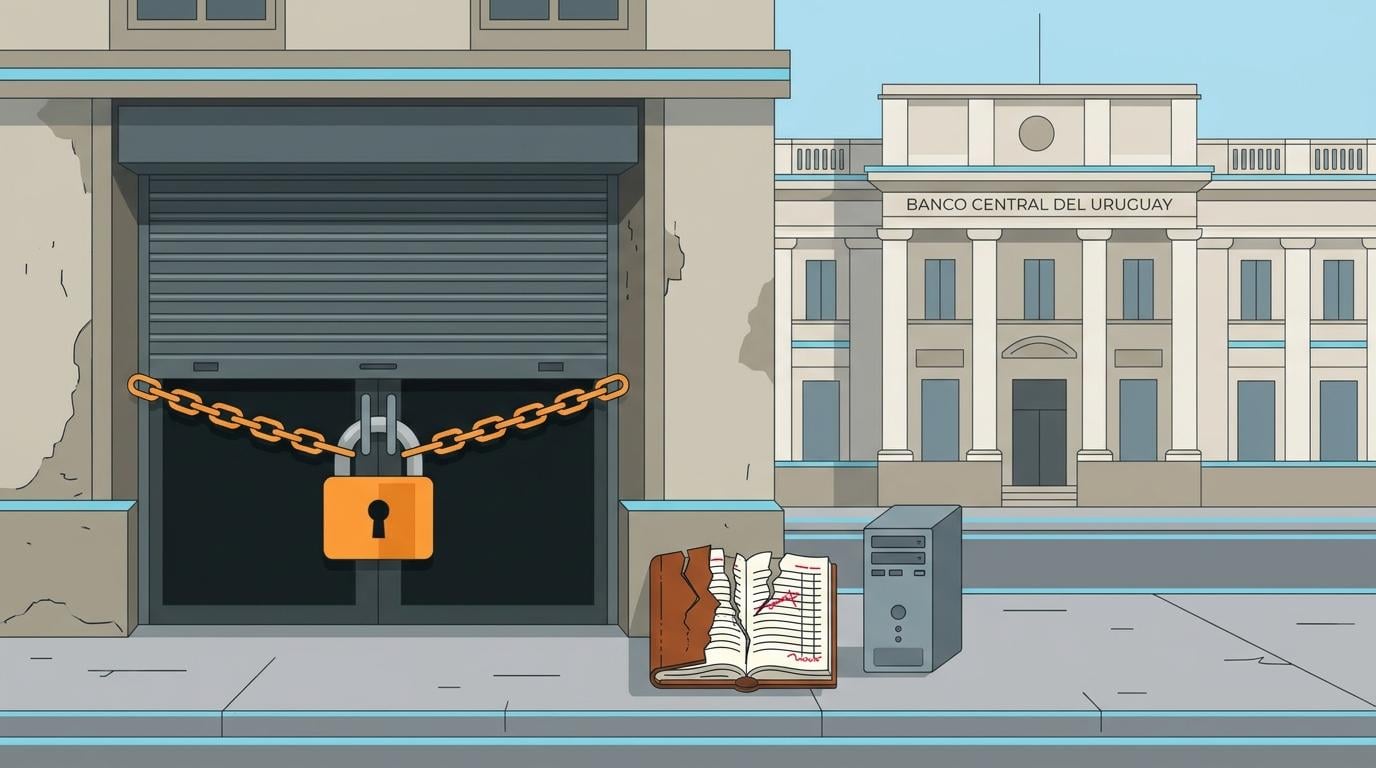
US$21.15 million. That is the hole at the center of GBU Sociedad de Bolsa, the Montevideo brokerage now ordered into dissolution and administrative liquidation by Banco Central del Uruguay.
The enforcement order, made public by El Observador, closes a process that began in January 2025 with a preventive intervention. Uruguay’s financial supervisor found that the firm falsified client account statements and changed its operating system to erase trading history.
The result is a regulatory endgame rather than a bailout. The central bank has already said any return to affected clients will depend on available funds. For international investors, the case is a reminder that counterparty and custody risk sit alongside currency and market risk in any cross-border strategy.
Inside the Fraud: Falsified Statements and a Rebuilt Paper Trail
As reported by El Observador, the central bank’s resolution lays out a sequence that began well before the intervention. As early as 2019, client assets were not where account statements said they were.
At the center is Gorriti S.A., a corporate client whose reported position at the end of August 2019 totaled more than US$32 million. The bulk was sovereign debt: roughly US$11.6 million in Uruguayan bonds and US$21.2 million in U.S. Treasury securities.
The problem emerged clearly. U.S. Treasury bonds shown in Gorriti’s statements had not actually been purchased. Between June and July 2019, proceeds from the sale of Gorriti’s global bonds were used to buy short-dated U.S. Treasury notes. Those notes went into accounts held by other clients and by one of the brokerage’s own shareholders, Alvaro Correa.
Then, in May 2022, GBU transferred securities with a nominal value of US$21.5 million from Gorriti to an entity called Forestal I International Limited. The transfer was made on express instructions from Gorriti’s directors, but without judicial approval.
Supervisors only reconstructed these movements after recovering the brokerage’s earlier operating system. With the original system running again, the central bank confirmed a US$21.15 million shortfall owed to Gorriti.
The capital numbers are stark. GBU reported net equity of roughly US$204,856 in mid-2019 and about US$626,268 by September 2024. Neither figure comes close to covering the client shortfall.
- January 2025: BCU intervenes, suspends operations, replaces management, and freezes assets.
- March 2025: Authorization to operate is withdrawn after compliance failures.
- November 2026: BCU confirms insolvency and orders dissolution and administrative liquidation.
As a result, the central bank has been explicit: restitution to affected clients will be subject to what the liquidation actually recovers.
Our Read: Why This Enforcement Case Should Reassure International Investors
From our seat in Montevideo, the GBU case is not a sign of deepening systemic risk. It is the opposite.
The central bank moved in January 2025, suspended the firm, replaced its leadership, and froze client assets before the full scope of the fraud was even confirmed. That is how a supervisor should behave when account statements stop adding up.
We have long advised buyers and investors to treat financial counterparty risk as seriously as title risk in a property transaction. This episode matters because it shows that Uruguay’s regulator can unwind a failed intermediary without letting contagion spread through the rest of the securities market.
Uruguay’s supervisory perimeter is also widening. Law 20.345 already brings virtual asset service providers under the central bank’s remit, covering custody, transfers, and exchange activity. The same institution that just liquidated GBU now licenses and oversees digital-asset businesses.
The crypto connection is relevant, not decorative. A foreign investor who assumes Uruguay’s small-market charm means loose oversight should look at this week’s resolution. The central bank has shown it will intervene, reconstruct complex transaction history, and absorb the cost of shutting down a local player.
After the Liquidation: A Cleaner Perimeter for Uruguayan Financial Markets
The GBU resolution will not be the last enforcement action Uruguay’s regulators take, nor should it be. Markets earn trust when failures are investigated, documented, and resolved rather than hidden.
For international capital, the takeaway is practical. Due diligence in Uruguay should extend beyond property boundaries to the intermediaries holding client assets, the custody arrangements, and the licensing status of every firm in the transaction chain.
There is one risk on the buying side worth flagging, and it is not limited to securities accounts. When a single agent represents both seller and buyer in a real estate transaction, that arrangement is called dual agency. It can quietly soften the agent’s obligation to push for the best price and cleanest contract on your behalf. In Uruguay, as elsewhere, the practical result can be an inflated valuation, a liability that goes unexplored, or a negotiation where the advisor you hired is structurally balancing two conflicting loyalties.
The GBU liquidation will leave a mark on Uruguay’s securities community, but it also reinforces why we built our practice around transparent, institutional-grade guidance. Team Haverkate advises international buyers and investors who want to commit capital here without improvising through unfamiliar local structures, and we maintain close relationships with vetted local tax and legal specialists for anyone structuring a cross-border entry.
Frequently Asked Questions
What happened to GBU Sociedad de Bolsa in Uruguay?
Banco Central del Uruguay ordered GBU Sociedad de Bolsa, a Montevideo brokerage, into dissolution and administrative liquidation after confirming a US$21.15 million shortfall owed to a corporate client. The regulator intervened in January 2025, suspended operations, replaced management, froze assets, and withdrew the firm’s authorization in March 2025 before confirming insolvency.
How did the GBU fraud work?
GBU falsified client account statements and altered its operating system to erase trading history. U.S. Treasury bonds shown in client Gorriti S.A.’s statements had never been purchased; proceeds from bond sales were routed into accounts held by other clients and a shareholder. Supervisors reconstructed the transactions only after recovering the brokerage’s earlier operating system.
Will GBU clients get their money back?
Any restitution depends on what the liquidation actually recovers. The central bank has been explicit that returns to affected clients are subject to available funds, and GBU’s reported net equity of roughly US$626,268 as of September 2024 falls far short of the US$21.15 million shortfall.
Does the GBU collapse signal systemic risk in Uruguay’s financial markets?
No. The case is best read as evidence of effective supervision rather than deepening systemic risk. The central bank intervened early, suspended the firm, replaced its leadership, and froze client assets before the full scope of the fraud was confirmed, unwinding a failed intermediary without letting contagion spread through the wider securities market.
What does the GBU case mean for international investors in Uruguay?
It is a reminder that counterparty and custody risk sit alongside currency and market risk in any cross-border strategy. Due diligence in Uruguay should extend beyond property boundaries to the intermediaries holding client assets, the custody arrangements, and the licensing status of every firm in the transaction chain.
Does Uruguay regulate cryptocurrency and virtual asset providers?
Yes. Law 20.345 brings virtual asset service providers under Banco Central del Uruguay’s remit, covering custody, transfers, and exchange activity. The same institution that liquidated GBU now licenses and oversees digital-asset businesses, widening the country’s supervisory perimeter.
What is dual agency and why does it matter when buying property in Uruguay?
Dual agency occurs when a single agent represents both seller and buyer in a real estate transaction. It can soften the agent’s obligation to push for the best price and cleanest contract on your behalf, potentially resulting in an inflated valuation, an unexplored liability, or a negotiation where the advisor is structurally balancing two conflicting loyalties.