KEY POINTS
- The Catholic Church estimates a US$2.7 million cost, funded primarily by a raffle and private donations rather than public money.
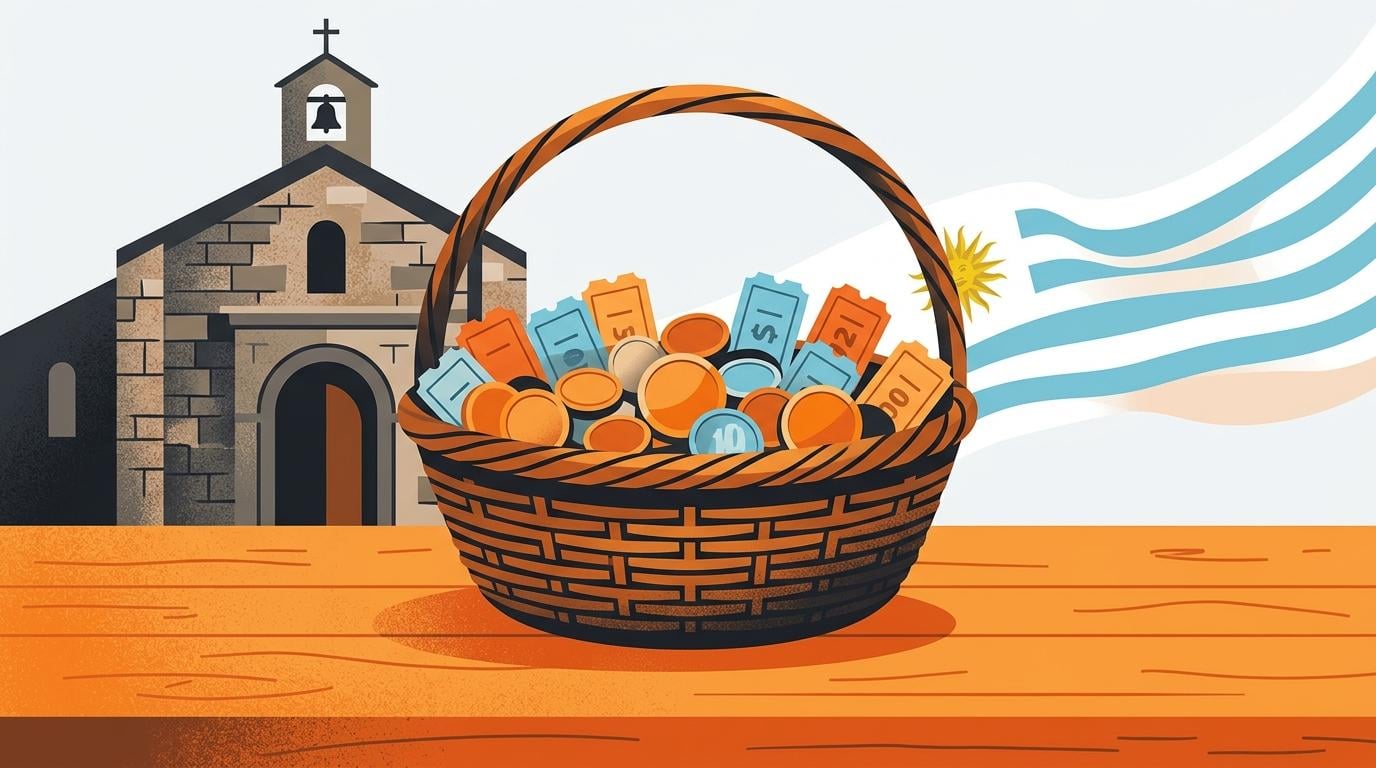
- Raffle tickets are priced at 2,000 Uruguayan pesos, with 40,000 available; top prizes include an apartment, vehicles, and trips to Rome, and net proceeds could reach US$1.6 million.
- The November visit will span Montevideo, Casavalle, Paysandú, and Florida, with up to 100,000 expected at the Paysandú Mass and external audit by Grant Thornton.
The Catholic Church in Uruguay has outlined a US$2.7 million financing plan for Pope Leo XIV’s visit in November, relying heavily on a national raffle and private donations rather than public funds. Individual contributors are expected to provide close to US$1 million, while a ticket raffle could generate an additional US$1.6 million under an optimistic scenario.
The financial architecture, first reported by El País, breaks down into five revenue streams: personal donations, a raffle called “A Great Joy,” corporate sponsors, Catholic institutional support, and collections at Masses.
The raffle offers 40,000 tickets at 2,000 Uruguayan pesos each, and if every ticket sells, gross revenue would reach US$2 million with 20 percent allocated to prizes. The top prize is an apartment in the Iconic Tower development on Luis Alberto de Herrera, currently under construction and expected to be completed by May 2027, while additional prizes include ten Suzuki vehicles and trips to Rome.
A draw scheduled for December 8 at the National Lottery Directorate will be conducted before a notary, with prizes delivered on December 15 at the Uruguayan Episcopal Conference headquarters. Sponsors will receive discreet logo placement on signage and screens, without implicating the pontiff with any brand.
Catholic schools, universities, and the Christian Association of Business Leaders (ACDE) are also being asked to contribute, while Mass collections are expected to bring in roughly US$300,000. The Vatican will cover the pope’s flight and personal expenses in Uruguay, and the television broadcast will be a co-production between Channel 5 and Tenfield.
External auditing will be handled by Grant Thornton, a global accounting and advisory firm. Around 3,500 volunteers have registered to assist with crowd guidance, accessibility, and papal motorcade logistics.
In Casavalle, a cross built by young people from the National Institute for Adolescent Social Inclusion will be displayed at the Our Lady of Guadalupe parish. In Paysandú, an outdoor Mass at Paris-London Park is expected to draw up to 100,000 people on November 7. The pope will also visit Florida, where preparations are underway at the cathedral and Assembly Square.
At the Catholic University of Uruguay, Pope Leo XIV will deliver a speech on education and receive a gift from the institution. The event is limited to about 350 invited guests in the main hall, with an additional 1,000 faculty and students expected for a blessing from an interior balcony.
Soft-Power Signal and Local Consumption Lift
Uruguay’s privately financed papal visit is a low-fiscal-risk event that channels spending into hospitality, transport, and retail across Montevideo, Paysandú, and Florida. Comparative international cases show the economic footprint can be significant but uneven: France’s September 2026 papal visit had an organizational budget of about €27 million, while Peru’s Lambayeque region projected a US$200 million tourism impact—a figure that has not yet been independently verified.
For international investors and expats, the visit reinforces Uruguay’s reputation as a stable, organized destination capable of hosting high-profile international figures without burdening public budgets. Short-term demand will likely benefit hotels, restaurants, and local services near event venues, though the broader macroeconomic effect is expected to remain modest and consumption-led.