Key Takeaways
- South Korea formally requested Uruguay’s help to restart Mercosur FTA negotiations frozen since 2021, leveraging Uruguay’s 2026 rotating chairmanship.
- Uruguay is simultaneously coordinating Mercosur’s trade talks with Korea, positioning itself as a key gateway for Korean capital and technology investment.
- The EU’s interim Mercosur trade agreement took provisional effect on 1 May 2026, and EFTA signed its own deal in September 2025, reinforcing Uruguay’s trade momentum.
Table of Contents
Seoul Turns to Montevideo to Unblock a Trade Pact
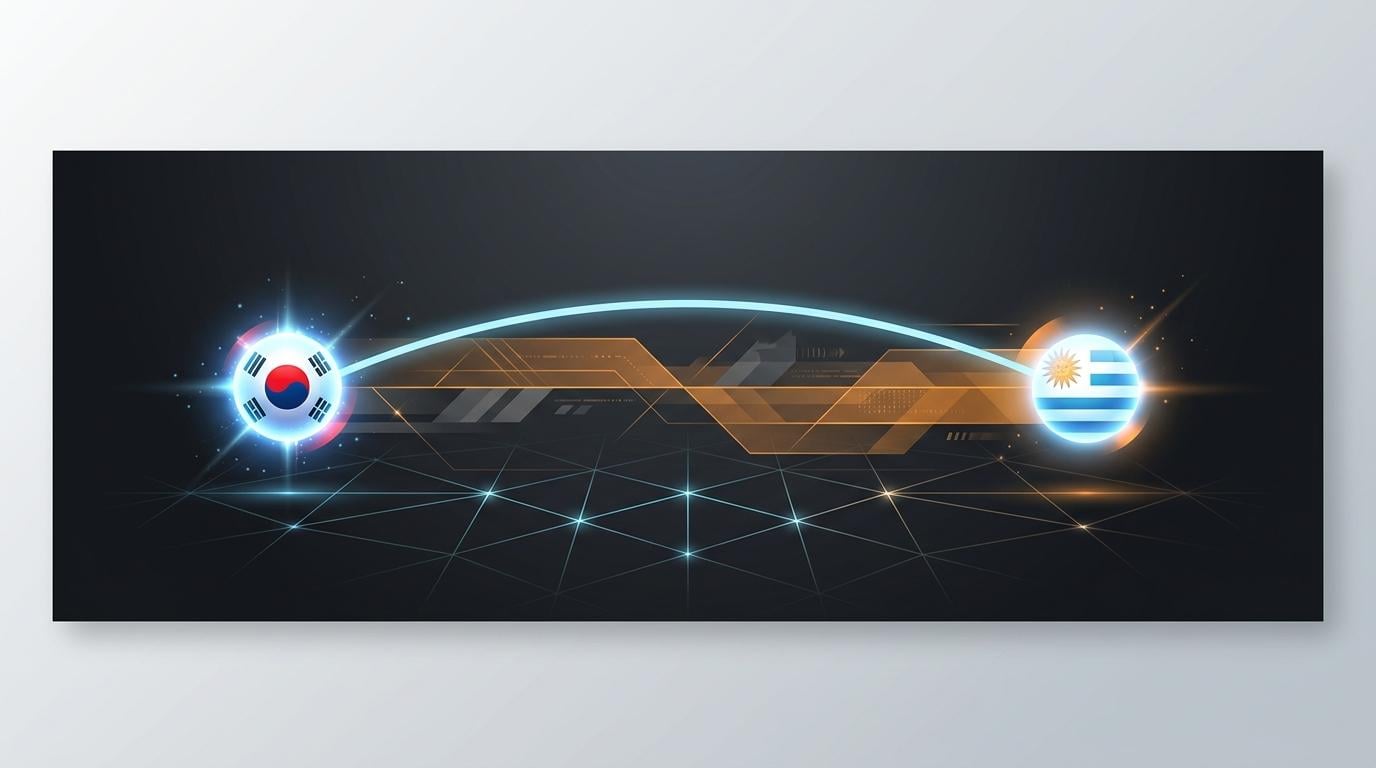
South Korea asked Uruguay on Friday to help restart free trade negotiations with Mercosur, placing Montevideo at the center of a diplomatic push frozen since 2021. The request came during a meeting in Seoul between South Korea’s First Vice Foreign Minister Park Yoon-joo and Uruguay’s Deputy Foreign Minister Valeria Csukasi, first reported by Yonhap.
Park framed the resumption as a priority for expanding economic cooperation between the two sides. Uruguay holds two relevant roles at once: it is the rotating chair of Mercosur for the second half of 2026 and coordinates the bloc’s trade talks with South Korea.
The signal is clear for investors tracking Uruguay. A small market is being asked to do a large job: turn a stalled regional negotiation into a live trade agenda.
Why Uruguay’s Mercosur Chairmanship Matters
Mercosur is the customs union linking Brazil, Argentina, Paraguay, Uruguay and Bolivia. South Korea and the bloc opened formal trade negotiations in 2018. Since 2021, those talks have not advanced formally—which is why the Seoul meeting matters beyond a routine courtesy call.
According to Yonhap, the deputy foreign ministers did not announce a date for renewed negotiations. They did outline two parallel lanes: resuming the trade pact and expanding cooperation in artificial intelligence and other advanced technologies.
Csukasi singled out AI as a defining element of future industrial competitiveness. That signals Uruguay wants more than tariff schedules. It aims to position itself inside the technology and services trade that a modern agreement with South Korea could unlock.
A completed deal could lower import duties on Uruguayan food and agricultural goods into Korea. It could also open Korean industrial goods and investment into Mercosur, including Uruguay’s logistics, services and technology sectors. The mechanism is straightforward: lower trade frictions, then watch where capital and companies choose to sit.
But the friction is not new. Seoul is asking Montevideo to move a process that has been stuck for five years. The request is a step, not a signature.
The Haverkate Read: Trade Momentum and Uruguay’s Investment Story
In our experience advising international investors, trade diplomacy rarely makes headlines. It shows up later in leasing demand, warehouse construction and headquarters decisions. This Korean overture looks small on paper, but it lands on top of a wider pattern.
According to the European Commission, the European Union began provisional application of its interim trade agreement with Mercosur on 1 May 2026. The EFTA countries signed their own Mercosur agreement in September 2025 after eight years of negotiation, giving Swiss exports free access for 96% of goods. Canada’s 2026 budget lists Mercosur among the trade deals it is actively advancing.
None of these facts guarantee a Korea-Mercosur pact. What they show is that Uruguay is not a passive observer. It sits inside a web of simultaneous external negotiations, each of which pushes trade infrastructure and legal certainty slightly higher on the regional agenda.
We read the Korea request as a leading indicator, not a transaction. A resumed negotiation would likely take years. But even the attempt signals that Seoul sees Uruguay as a serious entry point to South American markets, and that perception tends to precede investment.
For real estate and investment positioning, the relevant question is not whether the deal gets signed this quarter. It is whether Uruguay continues to function as a stable, connectable platform. The trade agenda suggests it does.
From Trade Diplomacy to Capital Flows
Uruguay has spent years positioning itself as the reliable small market inside a large regional bloc. The Korean request fits that identity. Trade talks do not produce property returns directly, but they build the legal and logistical frame that cross-border businesses need before they lease offices, build plants or hire regional teams.
For investors watching this trade diplomacy, one risk on the buying side is worth flagging. Dual agency occurs when a single agent or brokerage represents both the buyer and the seller in the same property transaction. That arrangement can undermine independent negotiation, obscure liabilities and inflate valuations, because the agent may have a financial stake in closing the deal on the seller’s terms more than in protecting the buyer’s position.
The trade agenda is quiet, but the entry strategy for foreign capital into Uruguay still requires the right local structure. Team Haverkate guides international buyers and investors through Uruguay’s property market, from due diligence to closing, and we maintain close relationships with vetted local tax and legal specialists for anyone structuring a cross-border entry.
Frequently Asked Questions
What did South Korea ask Uruguay to do regarding Mercosur?
South Korea asked Uruguay to help restart free trade negotiations between Seoul and Mercosur, which have been stalled since 2021. The request was made during a meeting in Seoul between South Korea’s First Vice Foreign Minister Park Yoon-joo and Uruguay’s Deputy Foreign Minister Valeria Csukasi.
Why is Uruguay’s Mercosur chairmanship important for a Korea trade deal?
Uruguay holds the rotating Mercosur chair for the second half of 2026 and coordinates the bloc’s trade talks with South Korea. That dual role puts Montevideo at the center of efforts to revive a negotiation that has not advanced formally since 2021.
When did South Korea and Mercosur start trade negotiations?
South Korea and Mercosur opened formal trade negotiations in 2018. The talks have not progressed in a formal sense since 2021, and the recent Seoul meeting did not announce a date for renewed negotiations.
What would a Korea-Mercosur trade deal mean for Uruguay?
A completed deal could lower import duties on Uruguayan food and agricultural goods entering Korea. It could also open Korean industrial goods and investment into Mercosur, including Uruguay’s logistics, services and technology sectors, reducing trade frictions and influencing where capital and companies locate.
Is a Korea-Mercosur trade agreement guaranteed?
No. The Korean request is a step, not a signature, and a resumed negotiation would likely take years. Analysts read it as a leading indicator of Seoul’s interest in Uruguay as an entry point to South American markets rather than a completed transaction.
How does trade diplomacy affect real estate investment in Uruguay?
Trade talks do not produce property returns directly, but they build the legal and logistical framework that cross-border businesses need before leasing offices, building plants or hiring regional teams. Uruguay’s role in simultaneous external negotiations supports its position as a stable, connectable investment platform.
What is dual agency and why does it matter for buyers in Uruguay?
Dual agency occurs when a single agent or brokerage represents both the buyer and the seller in the same property transaction. It can undermine independent negotiation, obscure liabilities and inflate valuations, because the agent may have a financial stake in closing on the seller’s terms rather than protecting the buyer’s position.