Key Takeaways
- Uruguay added 23,581 electric vehicles in Jan–Oct 2026, a 116% jump, pushing UTE to expand charging from 553 to 1,000 points by end-2027.
- From January 2027, electric imports above US$19,000 face 5% or 9% IMESI, creating a two-tier market that favors entry-level models.
- Charging expansion relies on private operators at bus depots, shopping centres, and fuel stations, where investment viability remains unresolved.
Table of Contents
116% Sales Growth Forces Uruguay to Map a Larger Charging Grid
23,581 electric cars and SUVs reached Uruguayan dealers between January and October 2026, a 116% jump from the same ten months of 2025 and an average of 78 units every day.
The scale of that shift, first reported by Bloomberg Línea, has pushed charging infrastructure from a policy discussion into a delivery problem. The Ministry of Industry is now assembling a mix of bus depots, shopping centre garages, and fuel stations to serve drivers who cannot charge at home.
October alone delivered 3,190 electric vehicles to dealers, including utilities and trucks, up 74.7% year over year. Those figures set the context for a tax change arriving in January 2027, when premium electric imports above US$19,000 will start paying IMESI at 5% or 9%.
Where the Charging Network Grows Next
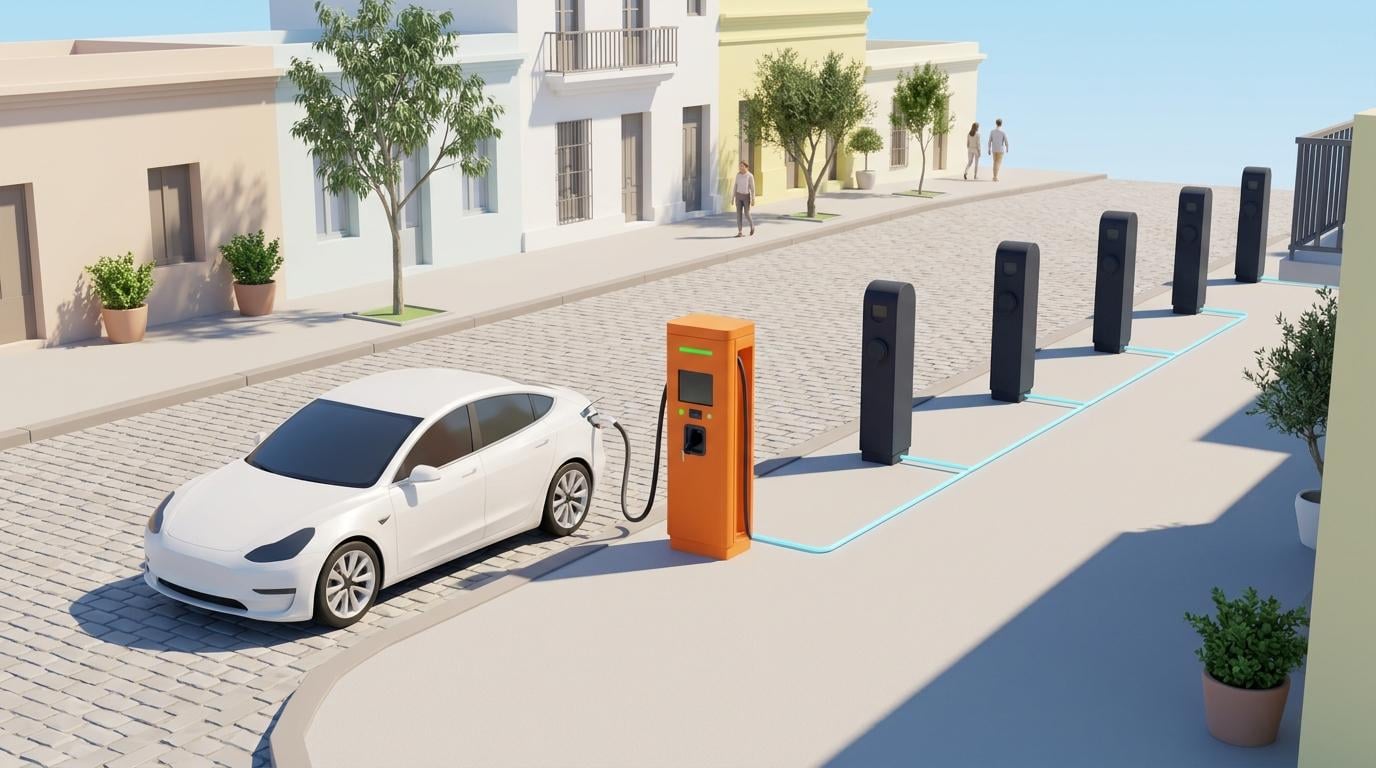
For investors, the raw unit count matters less than where the next charging points will sit, according to Bloomberg Línea. The state utility UTE currently operates 553 charging points, 338 of them direct current. The plan adds 300 more before the end of 2026, then reaches 1,000 by the close of 2027.
That is not a speculative map. It is a timetable attached to three physical networks.
Cutcsa’s Bus Depot Becomes a Neighbourhood Asset
An agreement with Cutcsa, the urban bus company, is scheduled for signing in mid-December. The company will open charging capacity at its José Añón plant on Avenida José Pedro Varela during night hours, when bus charging demand drops. That turns an industrial terminal into a local charging option for nearby residents.
Shopping Centres and Fuel Stations Fill the Gap
The same logic applies to shopping centre car parks, where chargers would stay available after shops close. UTE and Ducsa are also working on an agreement to place chargers at Ancap fuel stations in strategic locations, with the Ministry talking to fuel retailer union Unvenu about widening that network further.
Fuel station operators have raised a practical concern: installing chargers may require new equipment and higher electrical capacity, and the investment case is not settled. That detail matters. It means the buildout depends on private operators seeing a viable margin, not only on state targets.
The 2027 IMESI Line Moves from Exemption to Tiered Tax
From 1 January 2027, electric vehicles with an import value above US$19,000 will pay the Specific Internal Tax, IMESI. The rate will be 5% or 9%, depending on the vehicle’s value. Models below that threshold keep the current exemption.
The change arrives while the market is accelerating, which has two immediate effects. It draws forward some purchases into the final weeks of 2026, and it differentiates entry-level electric cars from premium electric SUVs for the first time.
Minister of Industry Fernanda Cardona has framed the infrastructure push around a simple split: about 80% of electric vehicle owners charge at home, while 20% need safe, accessible public alternatives. That 20% is the segment the new charging points aim to serve.
Our Read: The Tax Line Is Now an Investment Filter
From our side of the market, that import value threshold does something subtler than raise revenue. It creates a two-tier electric vehicle market at exactly the moment public charging is expanding.
We read the 2027 IMESI change as an investment filter: entry-level electric transport stays untaxed, while more expensive imports begin to carry a cost. That pulls forward some 2026 demand and may soften the premium segment early next year. It also signals that the government is comfortable moving from a broad exemption to a graduated tax once adoption is established.
The charging buildout follows the same rhythm. The state utility plans to add 447 points between now and end-2027, taking the network from 553 to 1,000. That is an infrastructure-led approach to keep the 20% of drivers without home charging from stalling the broader transition.
Infrastructure First, Then a Broader Market Window
The charging buildout and the tax change share a common feature: they reward buyers who move with clear information. In real estate, a fast-moving market can also compress due diligence.
One risk worth flagging is dual agency, where a single broker represents both seller and buyer in the same transaction.
That structure creates an unavoidable conflict of interest: the broker cannot push equally for the highest sale price and the lowest purchase price. In practice, it can lead to inflated valuations, hidden liabilities, or negotiation that favours the party who signed the agent first. Investors should ask whether their representative owes them an undivided duty before making an offer.
Uruguay’s charging map is becoming another marker of how the country absorbs growth: by building capacity ahead of friction, not after it. For international buyers watching the real estate market, the same read applies. Team Haverkate guides clients through residential and investment decisions as Uruguay layers infrastructure onto stable legal and tax foundations, and the firm maintains close relationships with vetted local tax and legal specialists for anyone structuring a cross-border entry.
Frequently Asked Questions
How many electric vehicles were sold in Uruguay in 2026?
Between January and October 2026, 23,581 electric cars and SUVs reached Uruguayan dealers, a 116% increase over the same period in 2025. That averages roughly 78 units per day, with October alone delivering 3,190 electric vehicles, up 74.7% year over year.
When does the IMESI tax on electric vehicles start in Uruguay?
The change takes effect on 1 January 2027. From that date, electric vehicles with an import value above US$19,000 will pay IMESI at a rate of 5% or 9% depending on the vehicle’s value. Models below the US$19,000 threshold keep the current exemption.
How many EV charging points does Uruguay plan to have by 2027?
The state utility UTE currently operates 553 charging points, 338 of them direct current. The plan adds 300 more before the end of 2026 and reaches 1,000 total charging points by the close of 2027, an addition of 447 points.
Where will new EV chargers be installed in Uruguay?
The buildout relies on three physical networks: Cutcsa’s José Añón bus depot on Avenida José Pedro Varela, which will open charging capacity during night hours; shopping centre car parks, where chargers stay available after shops close; and Ancap fuel stations in strategic locations under an agreement between UTE and Ducsa.
What percentage of EV owners in Uruguay charge at home?
According to Minister of Industry Fernanda Cardona, about 80% of electric vehicle owners charge at home, while 20% need safe, accessible public charging alternatives. The new charging points are aimed at serving that 20% segment.
How does the 2027 IMESI change affect the electric vehicle market in Uruguay?
The US$19,000 import value threshold creates a two-tier market: entry-level electric transport stays untaxed while more expensive imports begin to carry a cost. It draws forward some purchases into the final weeks of 2026 and may soften the premium segment early next year, signalling a shift from broad exemption to graduated taxation.
Why does dual agency matter for property buyers in Uruguay?
In dual agency, a single broker represents both seller and buyer in the same transaction, creating an unavoidable conflict of interest because the broker cannot push equally for the highest sale price and the lowest purchase price. This can lead to inflated valuations, hidden liabilities, or negotiations favouring the party who signed the agent first. Buyers should confirm their representative owes them an undivided duty before making an offer.