YOUR TAKEAWAYS
- The End of Imitations: The 2026 EU-Mercosur agreement legally protects over 350 European Geographical Indications (GIs) in Uruguay, ensuring access to 100% authentic luxury goods and slashing import tariffs by up to 35%.
- Commercial Real Estate Boom: The sudden affordability of European luxury goods is sparking intense demand for high-end retail spaces, wine cellars, and boutique delicatessens in coastal zones like Jose Ignacio and Punta del Este.
- Culinary Continuity: This strict alignment with European intellectual property and quality standards eliminates the “Third World compromise,” drastically increasing the appeal of luxury Uruguayan real estate for affluent EU and US expats.
A New Era of Intellectual Property in Consumer Goods
The January 2026 implementation of the EU-Mercosur Interim Trade Agreement introduces a structural transformation across South American consumer markets. Embedded within this landmark treaty is a rigorous intellectual property framework that explicitly recognizes and protects over 350 European Geographical Indications (GIs). For the first time in the history of the Mercosur bloc, the absolute authenticity of iconic regional products—such as Champagne, Prosciutto di Parma, and Comté cheese—is legally guaranteed within Uruguay’s borders.
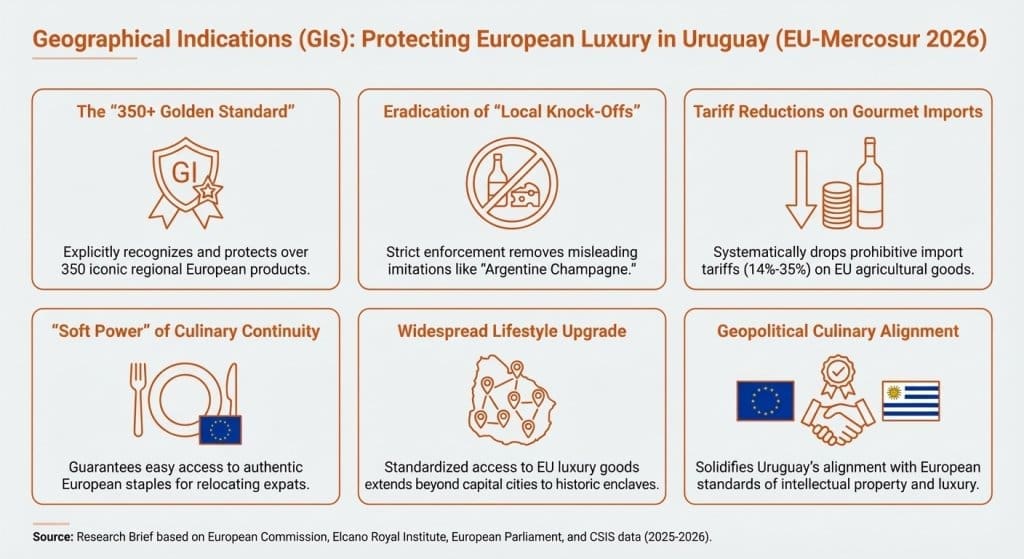
This strict enforcement of Geographical Indications permanently eradicates a long-standing historical anomaly in South American commerce. Over the last century, massive waves of Italian, Spanish, and German immigration led to the widespread production of generic, locally branded European goods. Prior to the 2026 agreement, local producers could legally market imitation cheeses, meats, and wines using European regional names, leading to the proliferation of misleading labels like “Argentine Champagne” or “Mercosur Parmesan.” The total eradication of these local knock-offs marks a massive shift in regional intellectual property law, signaling Uruguay’s definitive transition into a highly regulated, transparent “First World” consumer market.
Slashing Tariffs and Securing Premium Supply Chains
Beyond protecting naming rights, the trade deal systematically dismantles the prohibitive import tariffs that have historically restricted the flow of European luxury goods into South America. Import taxes that frequently ranged from 14% to 35% on European agricultural and dairy products have been drastically reduced or eliminated. This legislative shift has fundamentally restructured the economics of luxury food importation, securing highly verified, affordable supply chains for Uruguay’s premium retail sector.

Luxury supermarkets and elite delicatessens—including Tienda Inglesa, Devoto’s premium locations, and boutique grocers in Punta del Este and La Barra—now possess direct, cost-effective channels to import these protected culinary staples. The sudden availability and affordability of these goods are already triggering a surge in demand for high-end commercial retail spaces. Boutique wine cellars, European-style delicatessens, and artisanal bakeries are aggressively leasing prime commercial real estate in affluent coastal towns such as Jose Ignacio and Manantiales to capture this newly unlocked consumer demographic.
Gastronomic Cross-Pollination and Reciprocal Protections
The macroeconomic impact of these secure supply chains extends directly into Uruguay’s high-end hospitality sector. The guaranteed, tariff-free availability of authentic European ingredients is providing top-tier European chefs the logistical confidence required to relocate their operations to Montevideo and Punta del Este. This cross-pollination is rapidly elevating the local Michelin-tier gastronomy scene, which serves as a direct driver of luxury real estate appeal in prestigious neighborhoods like Punta Carretas and Carrasco.
Furthermore, the EU-Mercosur agreement establishes a foundation of mutual respect by reciprocally protecting over 220 Mercosur GIs. This includes specific Uruguayan wines and premium agricultural products. This reciprocal protection elevates Uruguay’s own brand prestige on the global stage, legally defending its domestic agricultural excellence within the lucrative European consumer market.
Team Haverkate Analysis
For high-net-worth (HNW) investors and European expatriates, the 2026 EU-Mercosur agreement’s protection of 350+ European Geographical Indications is a massive, tangible lifestyle victory. “Culinary continuity” is a heavily underestimated psychological factor in international relocation. For affluent German, French, and Italian expats, knowing they can easily access authentic Rioja wine, Polska Wódka, or Queijo S. Jorge removes a significant barrier to purchasing primary residences in South America. The drastic reduction in import tariffs means that maintaining a high-end European dietary lifestyle in Uruguay is suddenly substantially more affordable in 2026, increasing disposable income for local real estate investments.
From a strategic real estate perspective, this culinary and cultural alignment is the ultimate tool to dismantle any lingering “Third World compromise” objections from our foreign buyers. We can now confidently assure our clients that relocating to a sprawling estate in Punta Ballena or a luxury condo in Montevideo does not require abandoning authentic European luxury. Because these products enter Uruguay via standardized, national distribution channels, this lifestyle upgrade decentralizes luxury demand. Properties in quieter, historic enclaves like Colonia del Sacramento enjoy the exact same access to European goods as the capital, making them highly attractive to European retirees seeking quiet luxury.
Simultaneously, the reciprocal protection of Uruguayan exports creates an unprecedented investment window in the rural real estate sector. The elevated global prestige of Uruguayan agricultural products is attracting a sophisticated class of European wine and agriculture investors. This direct access to European markets is driving up the intrinsic value of rural “Chacras” (estates) in regions like Pueblo Garzón, transforming these properties from mere lifestyle assets into highly protected, globally recognized agricultural engines.
The Strategic Conclusion
At a macro level, the strict implementation of European Geographical Indications proves that Uruguay’s consumer market is fundamentally aligning with European standards of quality, intellectual property, and luxury. US and EU buyers are deploying capital in a jurisdiction that structurally protects and legally defends their exact standards of living. However, capitalizing on this sophisticated market—whether acquiring a high-yield commercial retail space in Jose Ignacio, a globally connected agricultural estate in Pueblo Garzón, or a luxury residence in Carrasco—requires rigorous, localized legal oversight.
Foreign investors entering Uruguay’s premium real estate market must be hyper-vigilant regarding the pervasive local practice of “Dual Agency.” When a real estate broker attempts to represent both the seller’s desire for maximum profit and your need for strict financial due diligence, your investment security is inherently compromised. Navigating commercial leases and high-value acquisitions demands uncompromised, independent representation.
Team Haverkate vehemently rejects the dual agency model. We operate strictly as your Exclusive Buyer’s Agent. Our sole fiduciary mandate is to protect your capital, providing independent legal scrutiny, forensic property evaluation, and strategic asset selection. We ensure that your investments in Uruguay meet the exact legal and quality standards you expect in Europe or North America. Contact Team Haverkate today to secure your luxury residential or commercial assets with complete confidence. Our expert advisory team is fully available to assist you in English, German, French, or Dutch.